Match Cut
I’ve started writing a book about all the different kinds of cuts. And I’ve figured out the match cut in Lawrence of Arabia.
A match cut is a cut based on a visual correspondence between shapes. It is used to give cinematic form to literary devices: metaphor, comparison, association, and so on. It is a real trick: a way to surprise viewers, confound their expectations, and make them hold their breath for a moment at the beauty of the idea contained in the cut. A match cut turns editing itself into an aesthetic event.
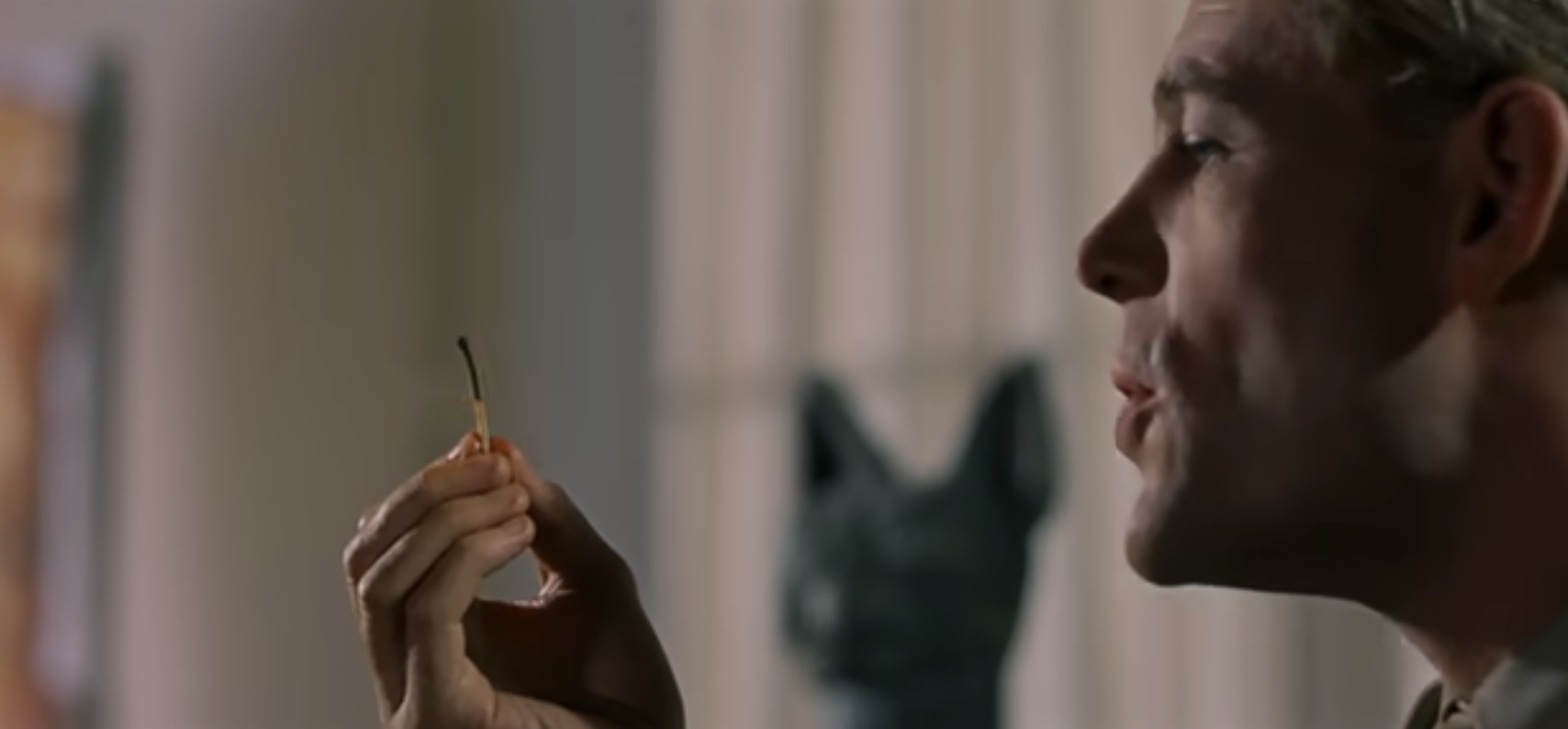
The first example of a match cut on Wikipedia and in many editing textbooks is David Lean’s Lawrence of Arabia, a film set during the First World War. Its protagonist, Thomas Edward Lawrence, is an educated British officer who has little patience for discipline. At headquarters in Cairo, among his fellow officers, he demonstrates a little trick: he lights a match and puts it out with his fingers. Another officer tries to do the same and burns himself. He asks Lawrence what the secret is. Lawrence replies with the famous line: “The trick, William Potter, is not minding that it hurts.”
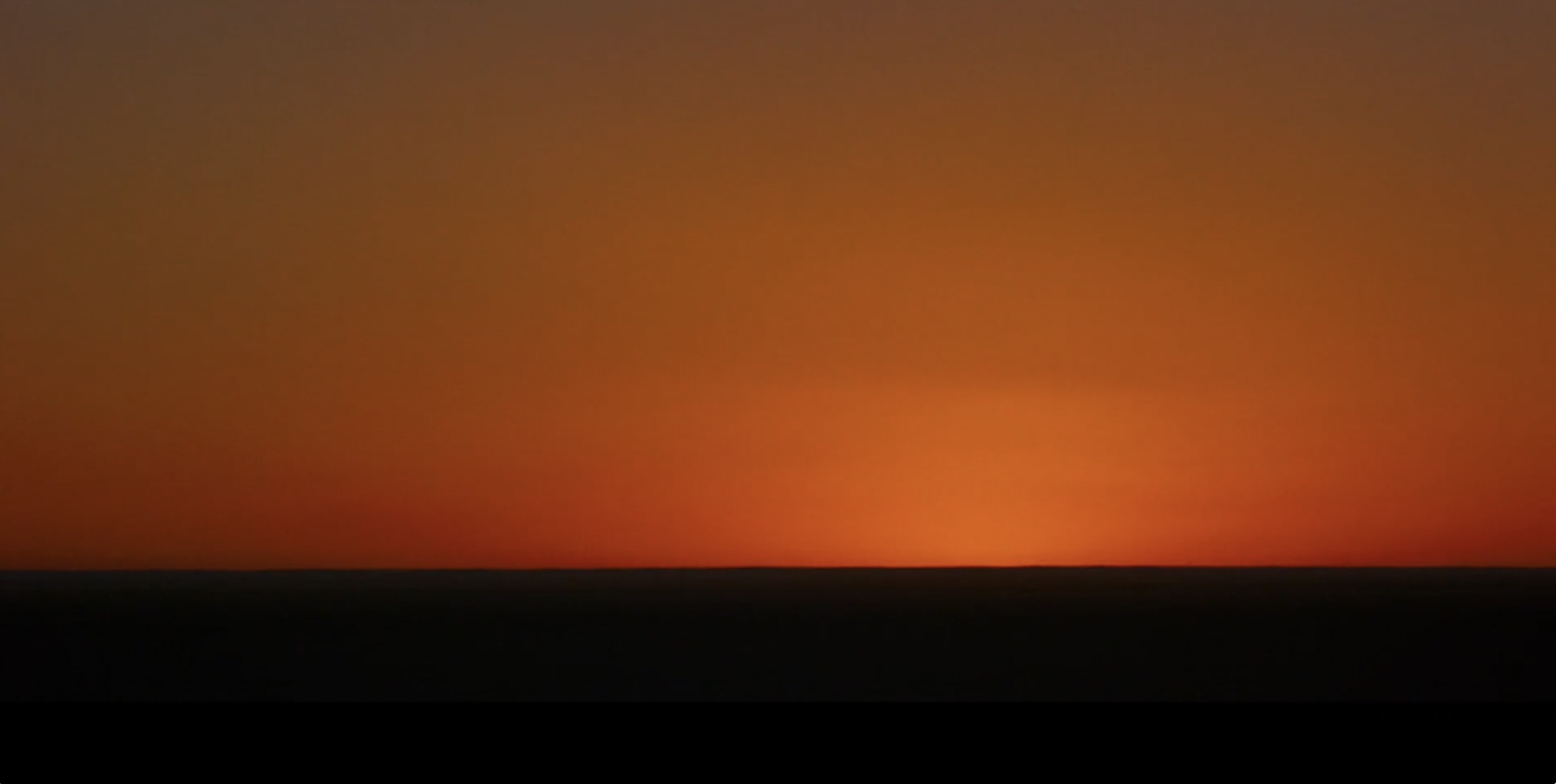
Lawrence is then told that he is being sent to Arabia. We see the famous cut. Thomas lights another match and, just before the flame reaches his fingers, blows it out. Next comes a frame divided into orange and black, followed by an orange sun slowly rising over the black desert of Arabia—in what is now Saudi Arabia—where Thomas, the white savior, supposedly helps the Arabs achieve independence by overcoming obstacles and enduring pain.
Originally, the screenplay described these two shots as follows: “He blows it out in the usual manner. DISSOLVE TO: Sunrise in the desert.”
The optical dissolve was to be added later in the lab. But when editor Anne V. Coates and David Lean watched the footage, they unexpectedly discovered how powerful the direct cut was. And they kept it.
This is called a hard cut: an abrupt, direct cut that makes the collision between two shots palpable, with no visual “cushion” between them.
There is an account of this cut from someone who attended one of the film’s earliest screenings. In 2013, writer and film critic David Edgerley Gates wrote that he first saw Lawrence of Arabia in early 1963, during its initial roadshow release. It was, for him, a “transforming experience”: “Early in the picture, there’s a breath-taking cut.”
The official book celebrating the film’s thirtieth anniversary—L. Robert Morris and Lawrence Raskin’s Lawrence of Arabia: The 30th Anniversary Pictorial History, with a foreword by Martin Scorsese, published by Doubleday in 1992—cements the story of how the cut came about. Its reputation then grows in the wider literature on cinema.
Its status as “David Lean’s much-admired straight cut” is affirmed in Paul Messaris’s Visual Literacy: Image, Mind, and Reality in 1994.
And a major professional textbook on the theory, history, and practice of film editing, Ken Dancyger’s The Technique of Film and Video Editing—in several editions published between 2010 and 2018—introduces it as “a brilliant match cut,” immediately followed by Kubrick’s “bone-to-spaceship” cut as another example.
From there, this “exemplary/brilliant match cut,” this “iconic example of a match cut,” spreads everywhere as a match cut, even though it is no such thing.
Several theorists try to challenge this.
Bordwell and Thompson’s Film Art recounts how its authors coined the term “graphic match” around 1975. Their example was not Lawrence at all, but Ozu’s “red sweater–red lamp” cut in Good Morning. In 2011, Bordwell specifically examines the cut in Lawrence and refuses to classify it as a graphic match: the match is on the left, the sun on the right; neither scale nor composition matches. For him, it is a conceptual link created by the juxtaposition of two glowing objects.
In an Art of the Cut interview, Walter Murch, one of America’s best-known film editors, answers Steve Hullfish’s question about this transition by saying: “It’s absolutely the opposite of a match cut.”
A hard cut is one of the most expressive kinds of cut: it momentarily disrupts the smooth flow of continuity editing, making viewers seem to wake up, notice the editing itself, and reconnect with what they are watching. Film history is full of such cuts: abrupt, unexpected, funny, frightening, poetic. Like the match cut, the hard cut is a fantastic example of creative editing in which the cut itself becomes an expressive gesture: it brings two shots into collision, creates an unexpected connection between them, and turns the transition from one image to another into an aesthetic event in its own right.
The move into the scorching desert comes immediately after Lawrence blows out the match, preventing the flame from touching his fingers. But the real pain awaits him on the other side of the cut: everything that takes him from triumph to catastrophe will be hard.
David Lean and the great Anne V. Coates, whose talk I’m attaching. And here is the cut.