Political Actions
For many years, our work was rooted in activist art – or “actionism,” as it is known in Russia.
In 2011, we took part in an action with the Voina group. Later that year, the feminist collective Pussy Riot was formed, and we were involved from the very beginning. We filmed the group’s political actions and edited the videos through which these actions reached their audience.
Filming and editing political actions is a distinct form of audiovisual practice. It requires a combination of skills rarely found in conventional filmmaking, activism, or journalism. Every action unfolds under extreme and unpredictable conditions: it may end in physical violence, arrest, imprisonment, or nothing at all. Yet the filming cannot simply document whatever happens. It has to follow a plan, anticipate the logic of the edit, and remain consistent with the group’s political and artistic ideas.
In this practice, the camera is not merely an observer, and the video is not simply a record of an event that has already taken place. The physical action happens at a particular moment, in front of a limited number of people. Through filming and editing, it acquires its public form and reaches its audience. The resulting video becomes inseparable from the action itself – not just its documentation, but part of the work.
This practice demands much more than professional skill. It consumes a lot of time, physical and mental energy, and eventually becomes a way of life. In the works that emerge from it, politics and art become inseparable.
DISOBEY
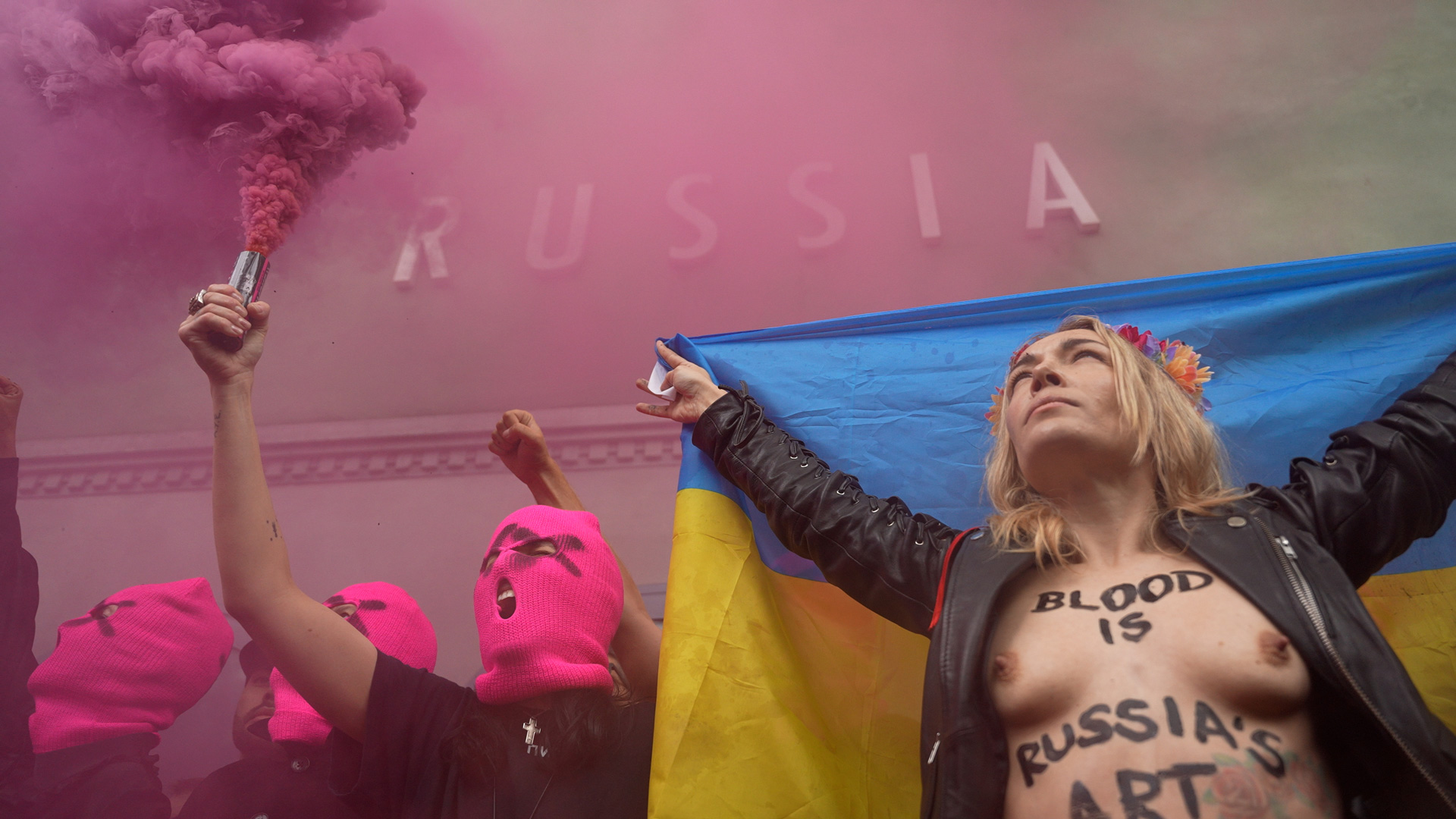
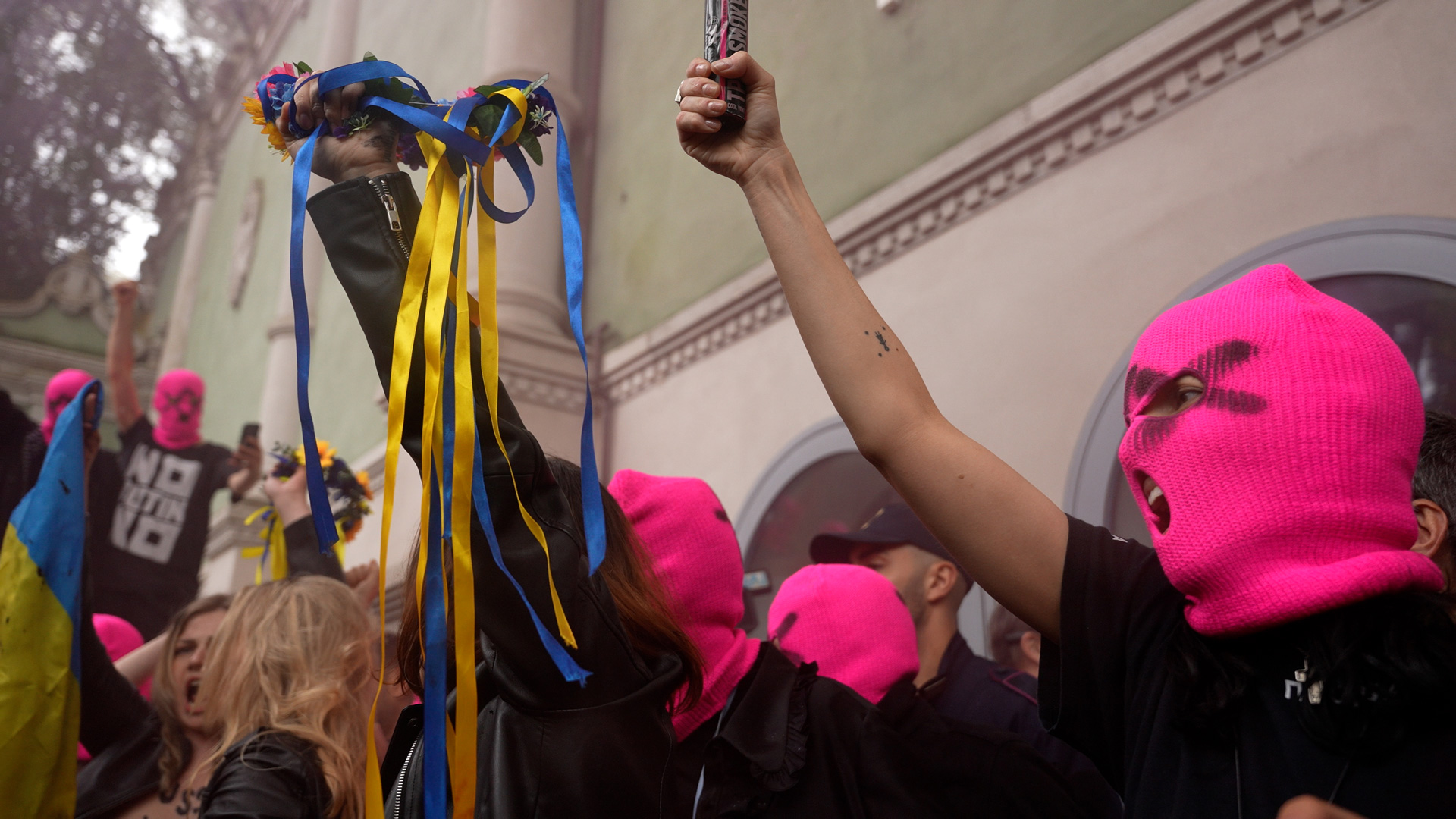
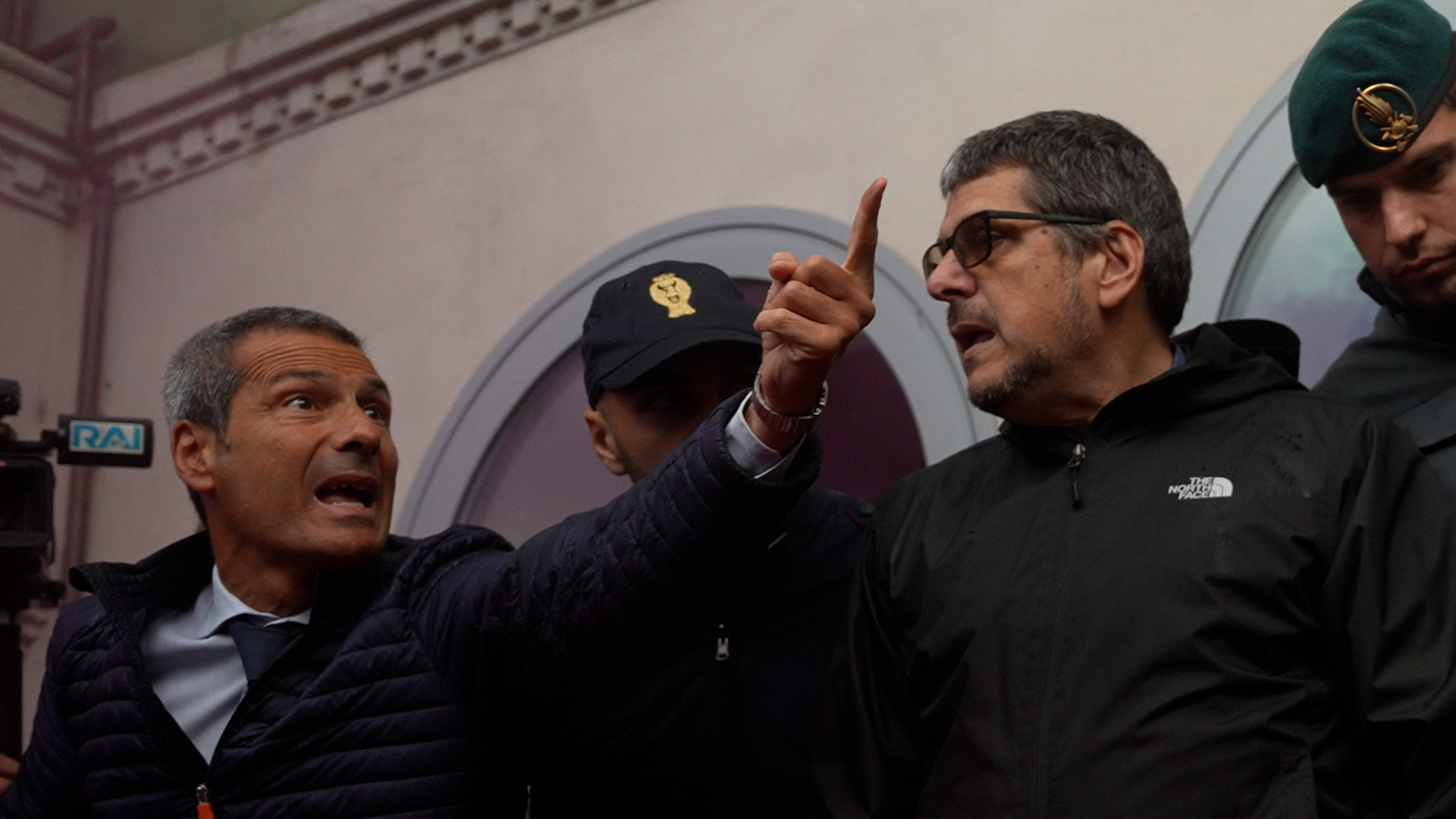
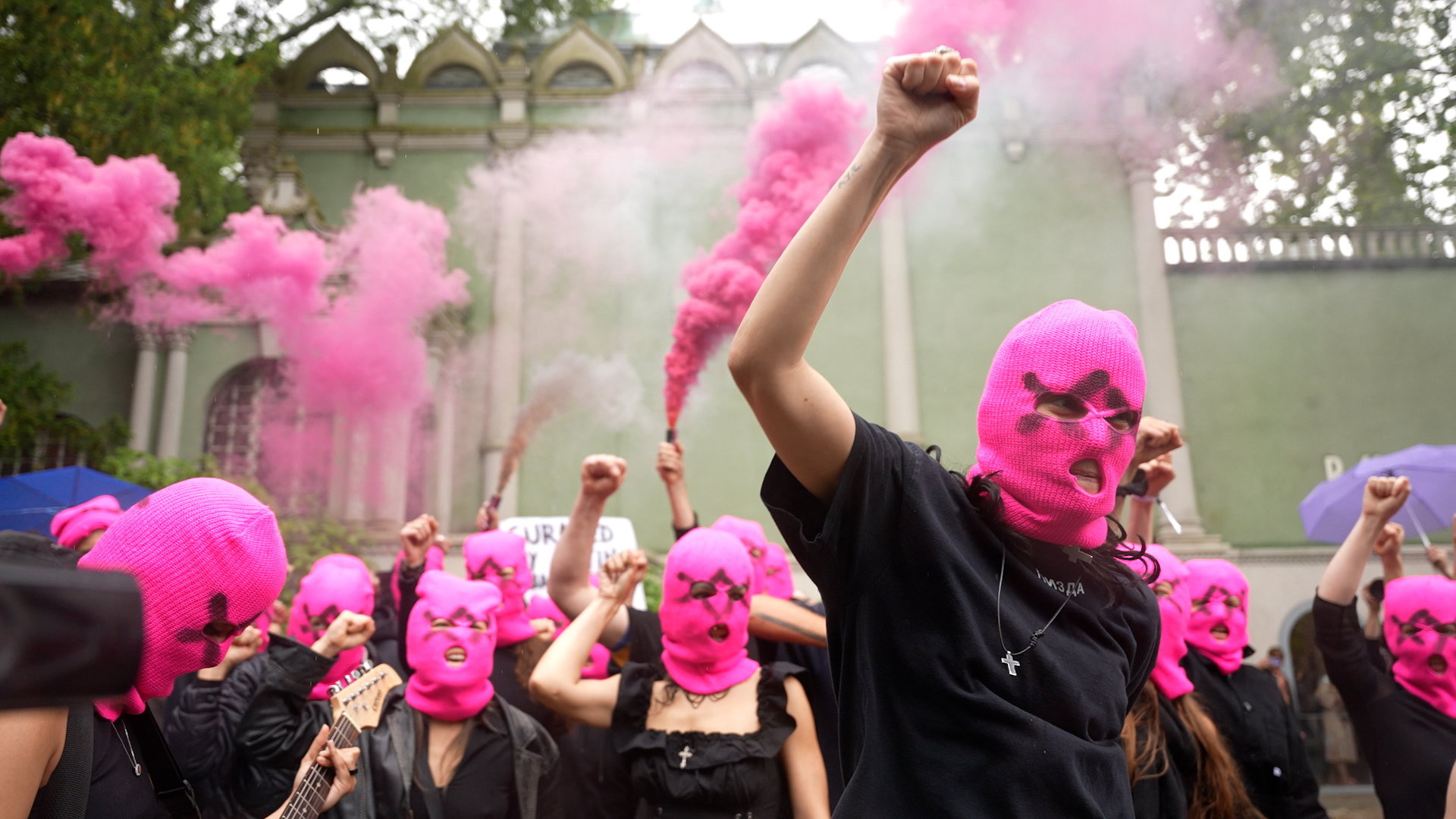
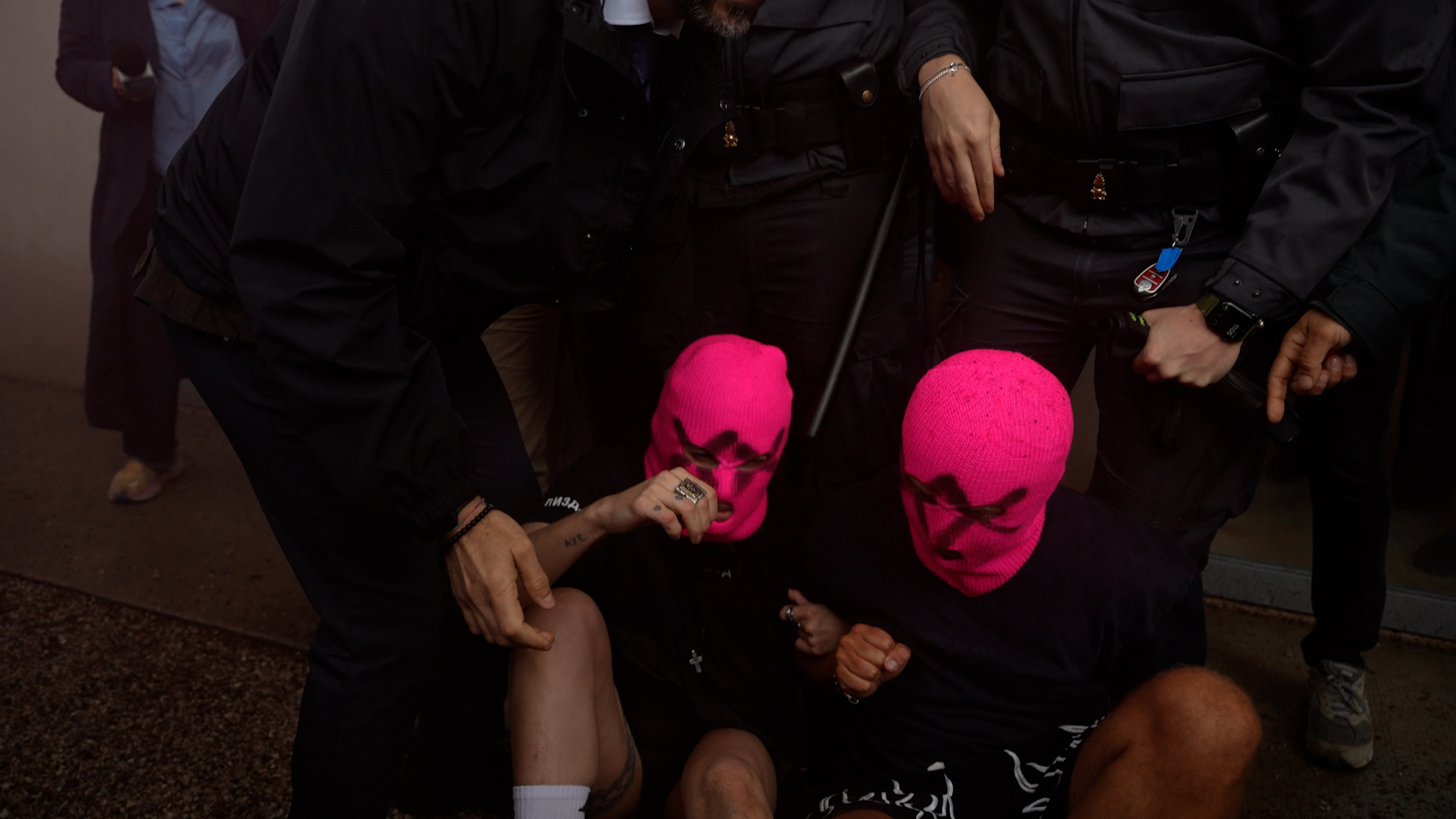
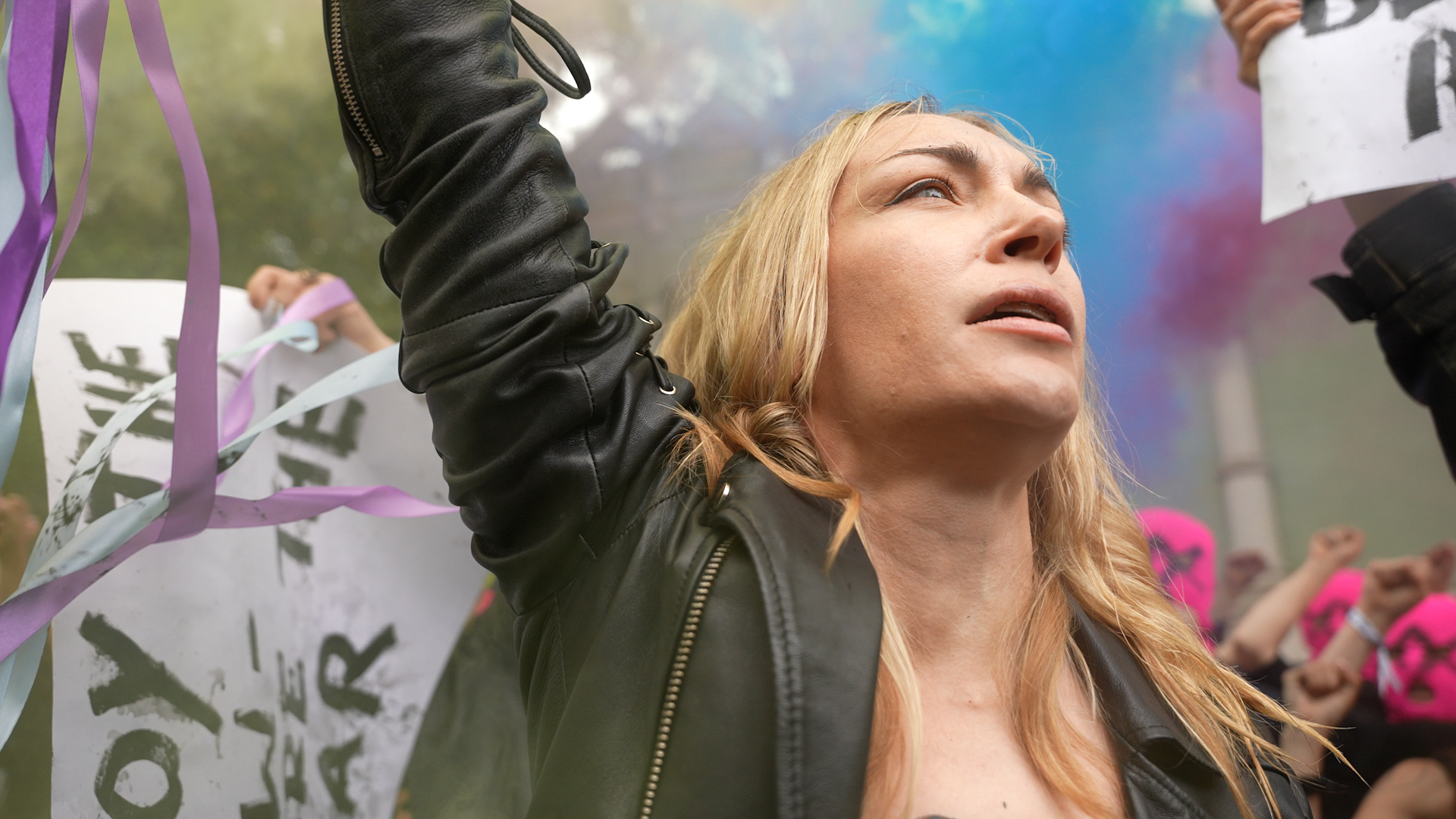
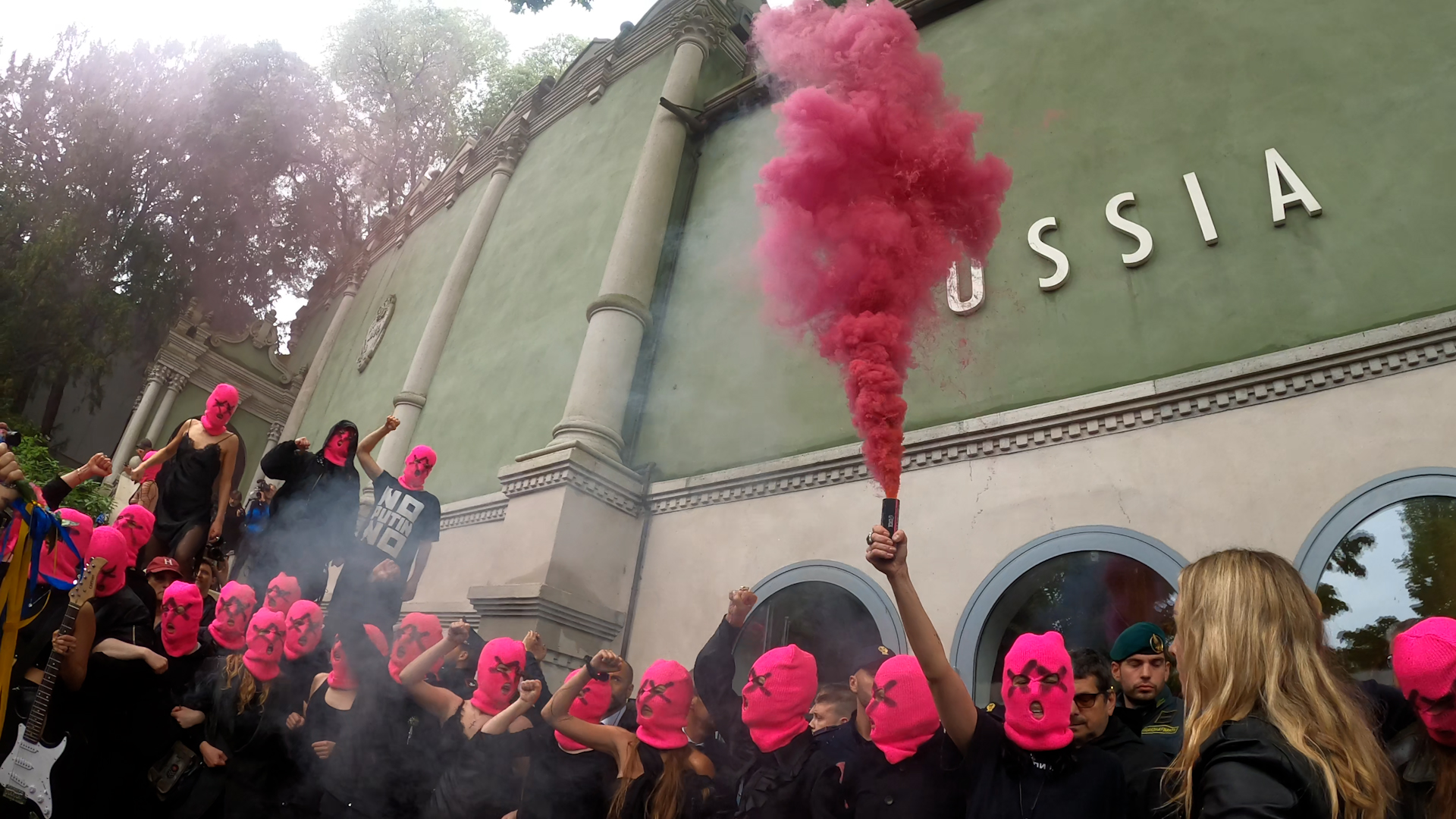
This was the first joint action by Pussy Riot and FEMEN against the Russian Pavilion at the Venice Biennale in May 2026.
More than 50 Pussy Riot members stormed the Russian Pavilion. Police were forced to close its doors as a loud protest performance unfolded outside.
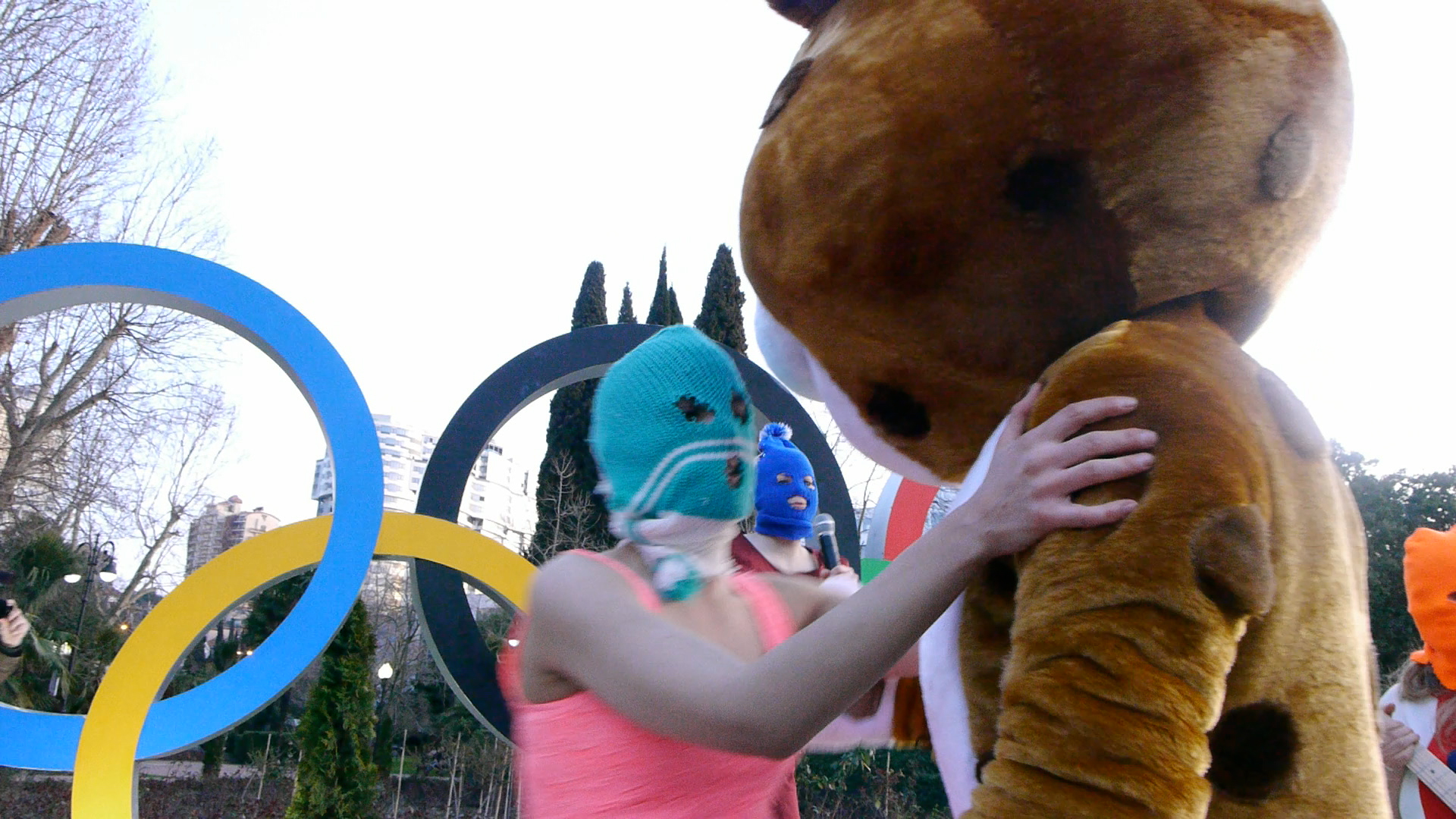
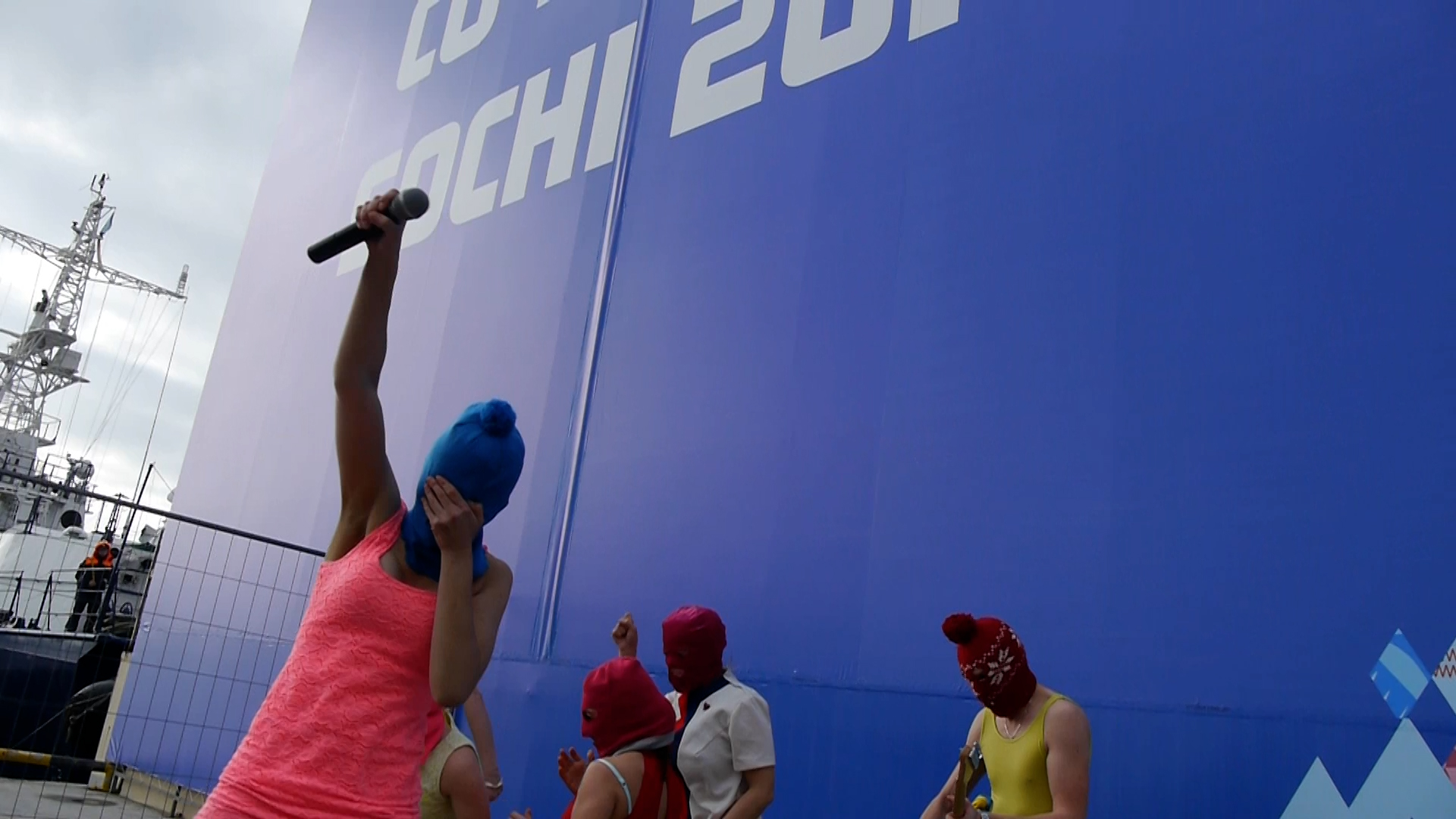
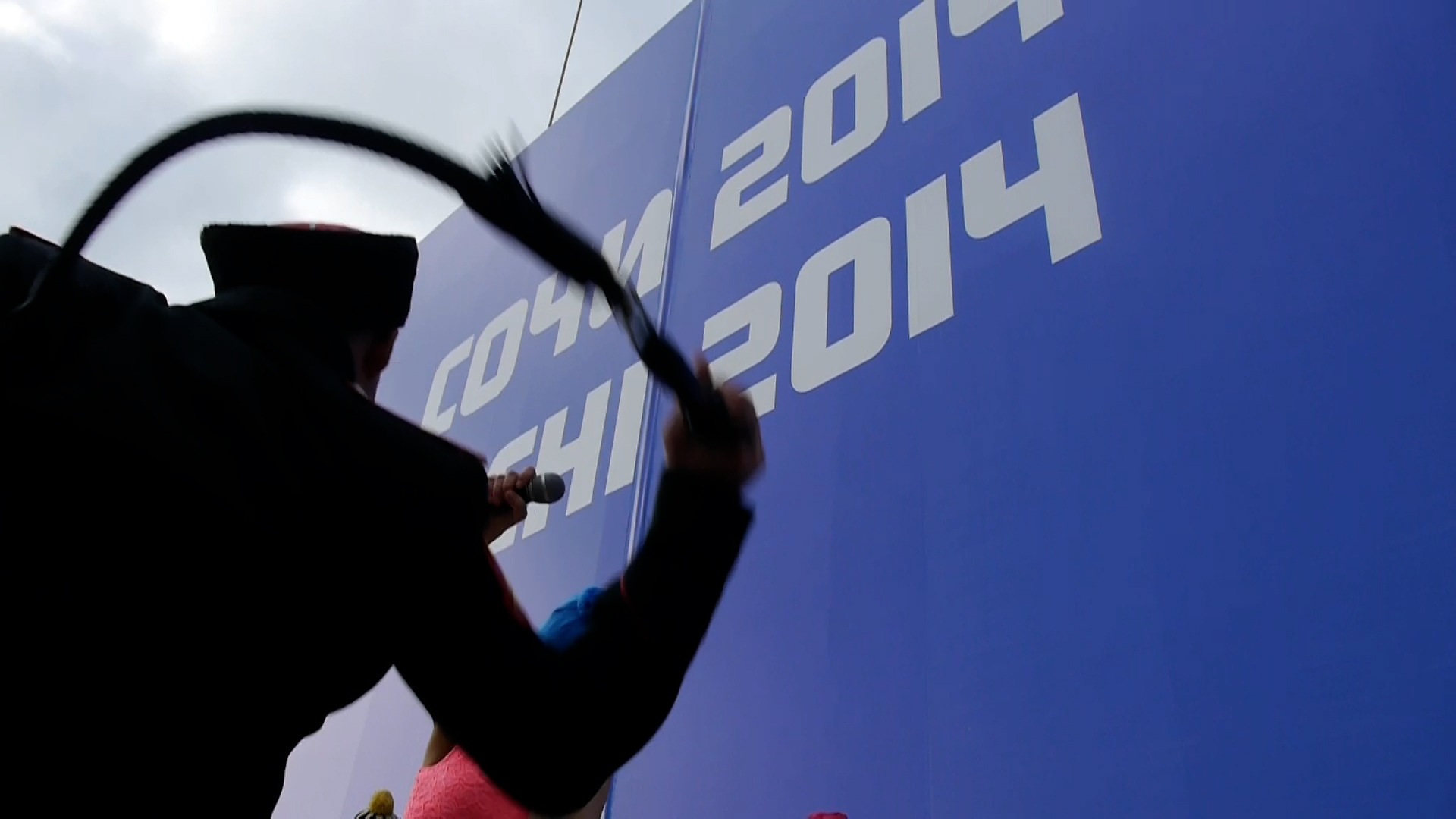
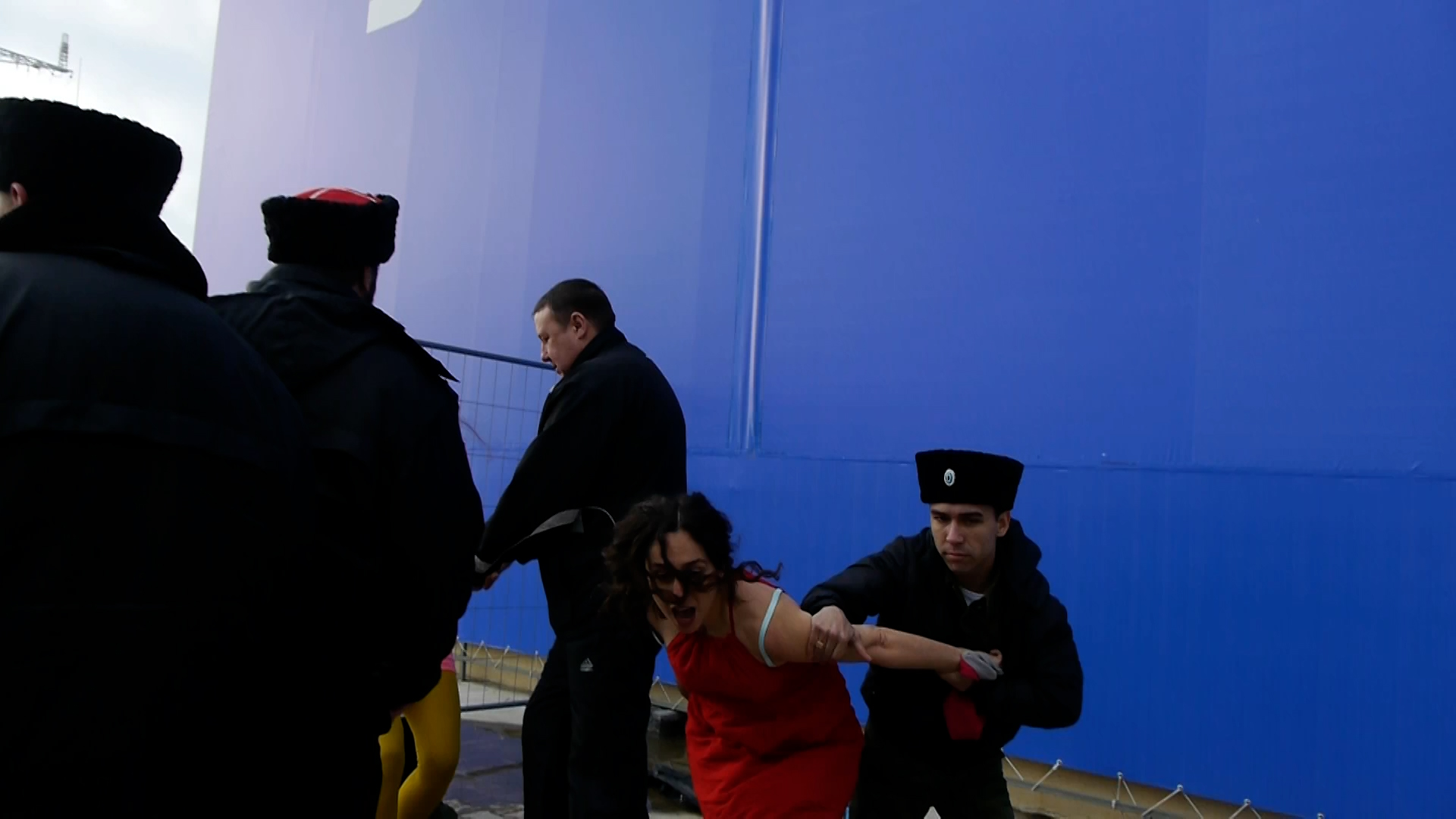
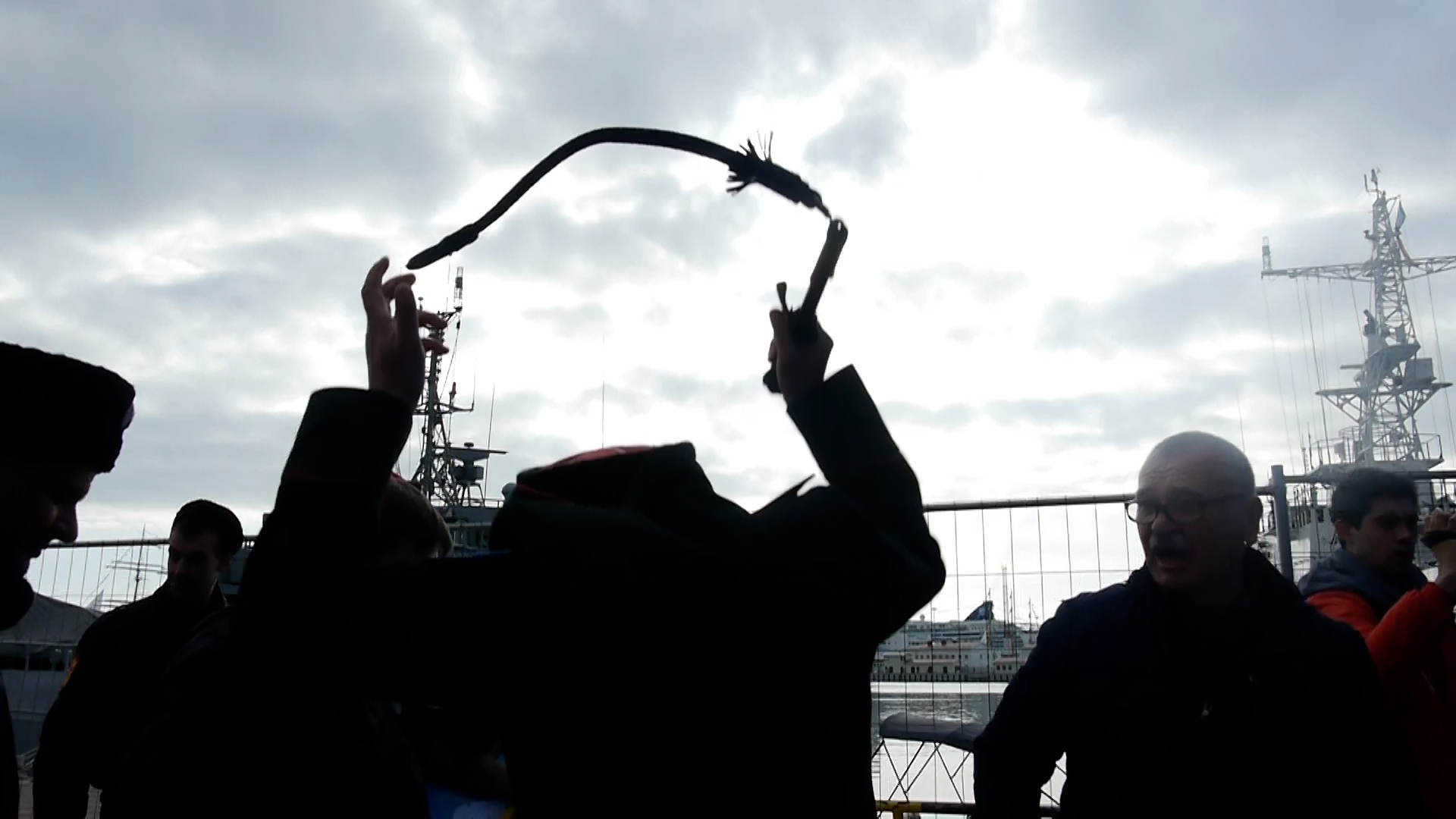
Putin will teach you how to love your motherland
The action took place in February 2014, during the Winter Olympic Games in Sochi.
Like a Red Prison
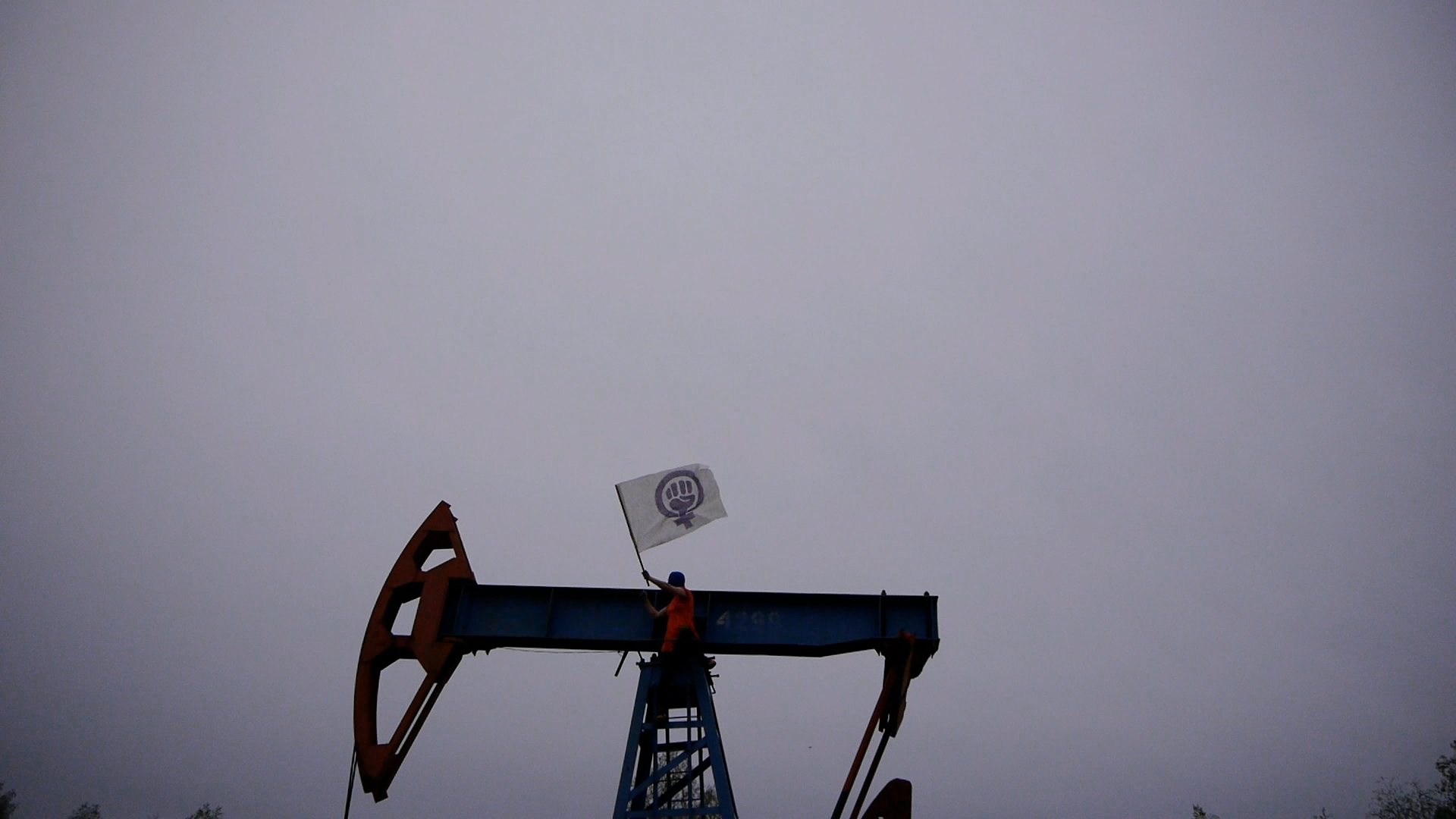
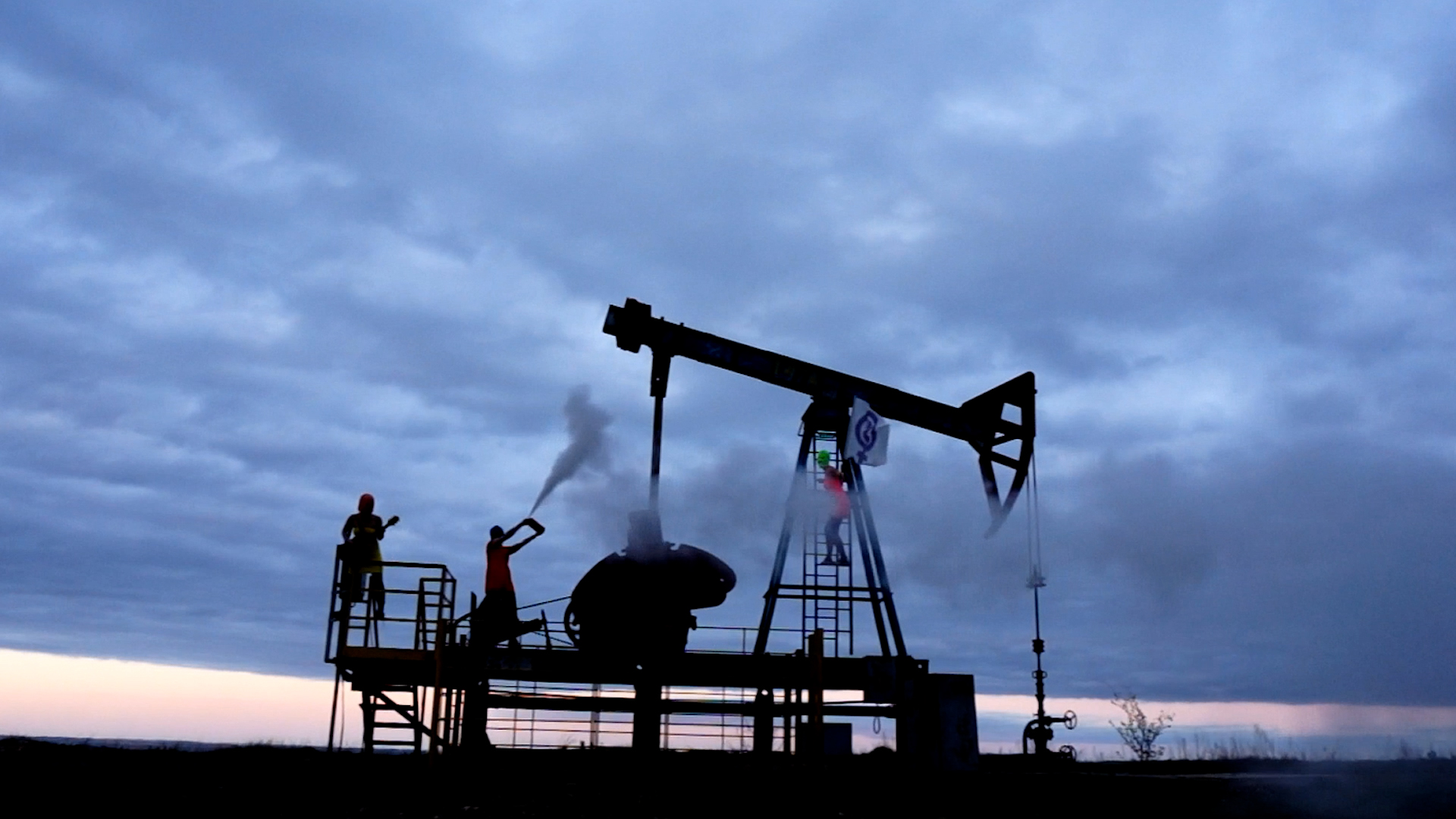
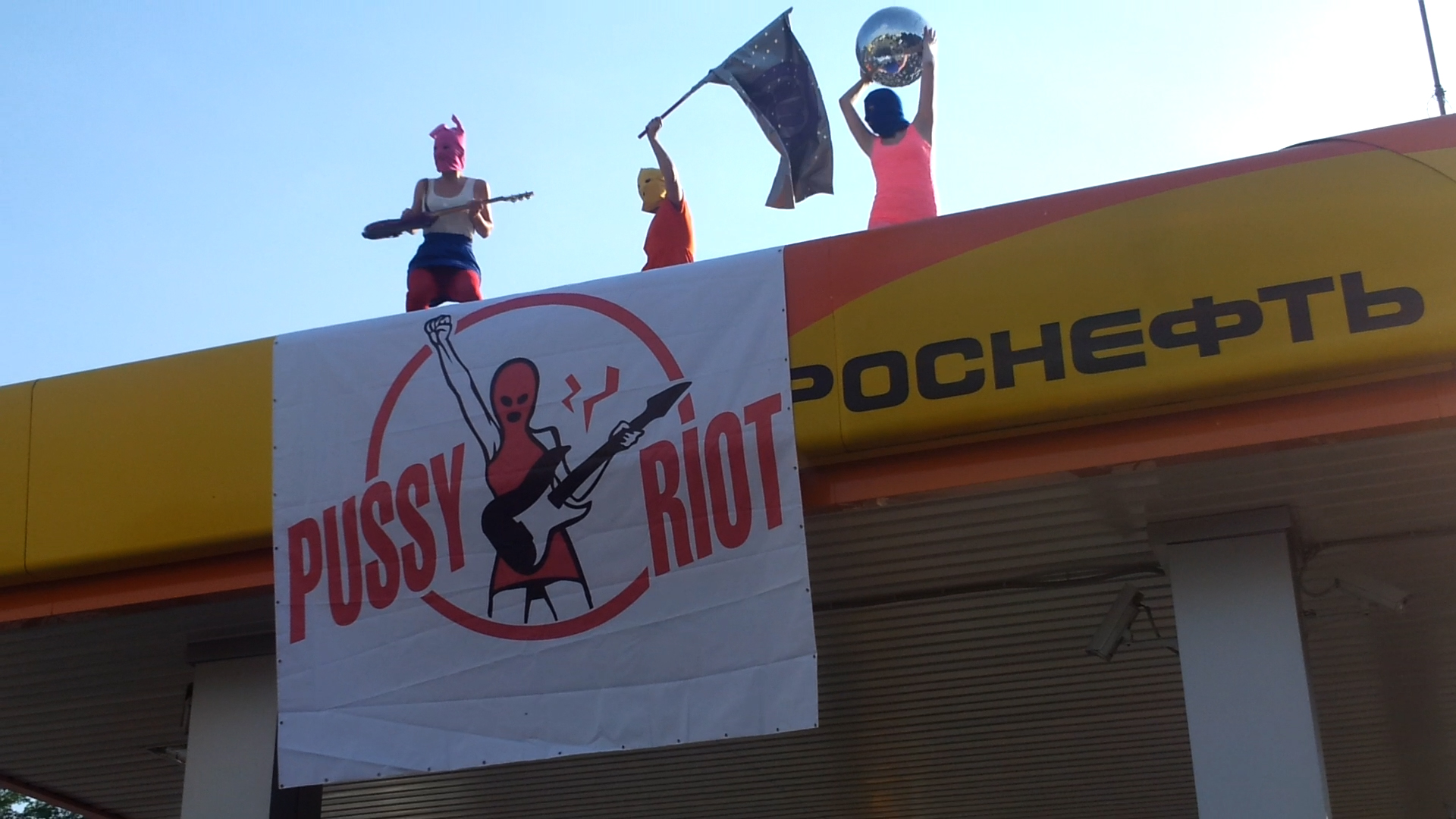
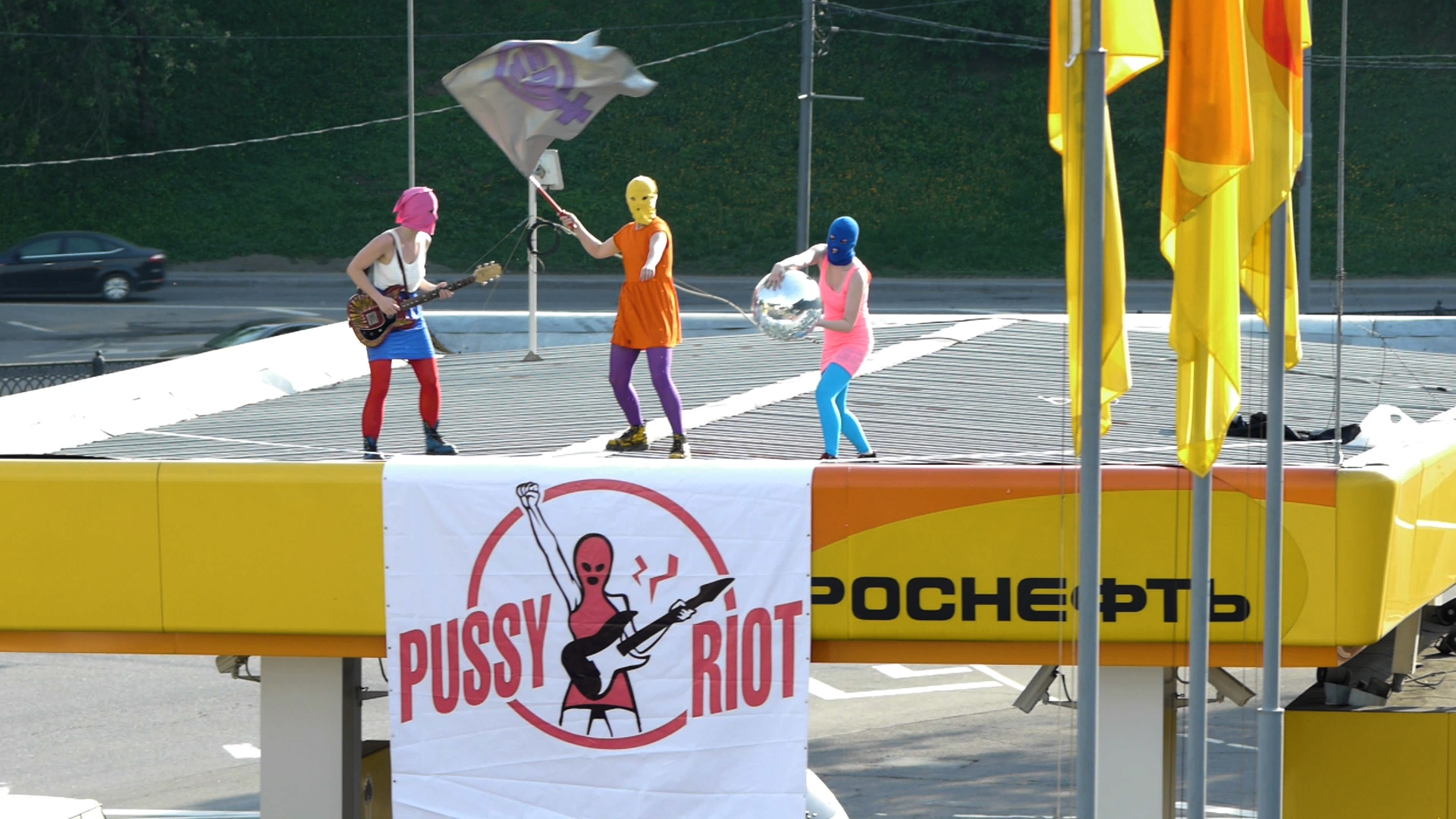
In 2013, Pussy Riot carried out a series of actions in support of the group members who had been imprisoned. During this campaign, they occupied sites belonging to Russia’s oil industry.
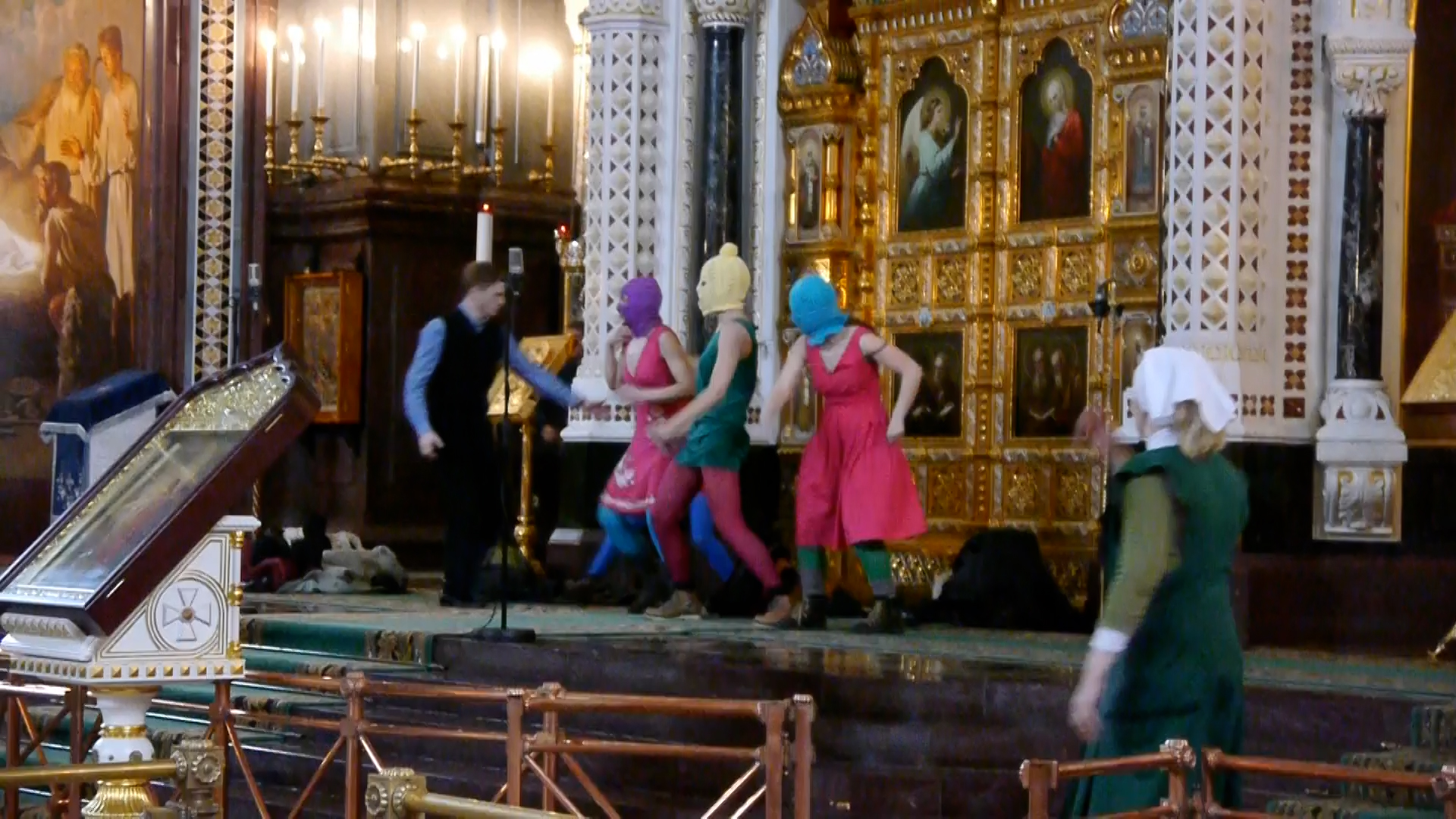
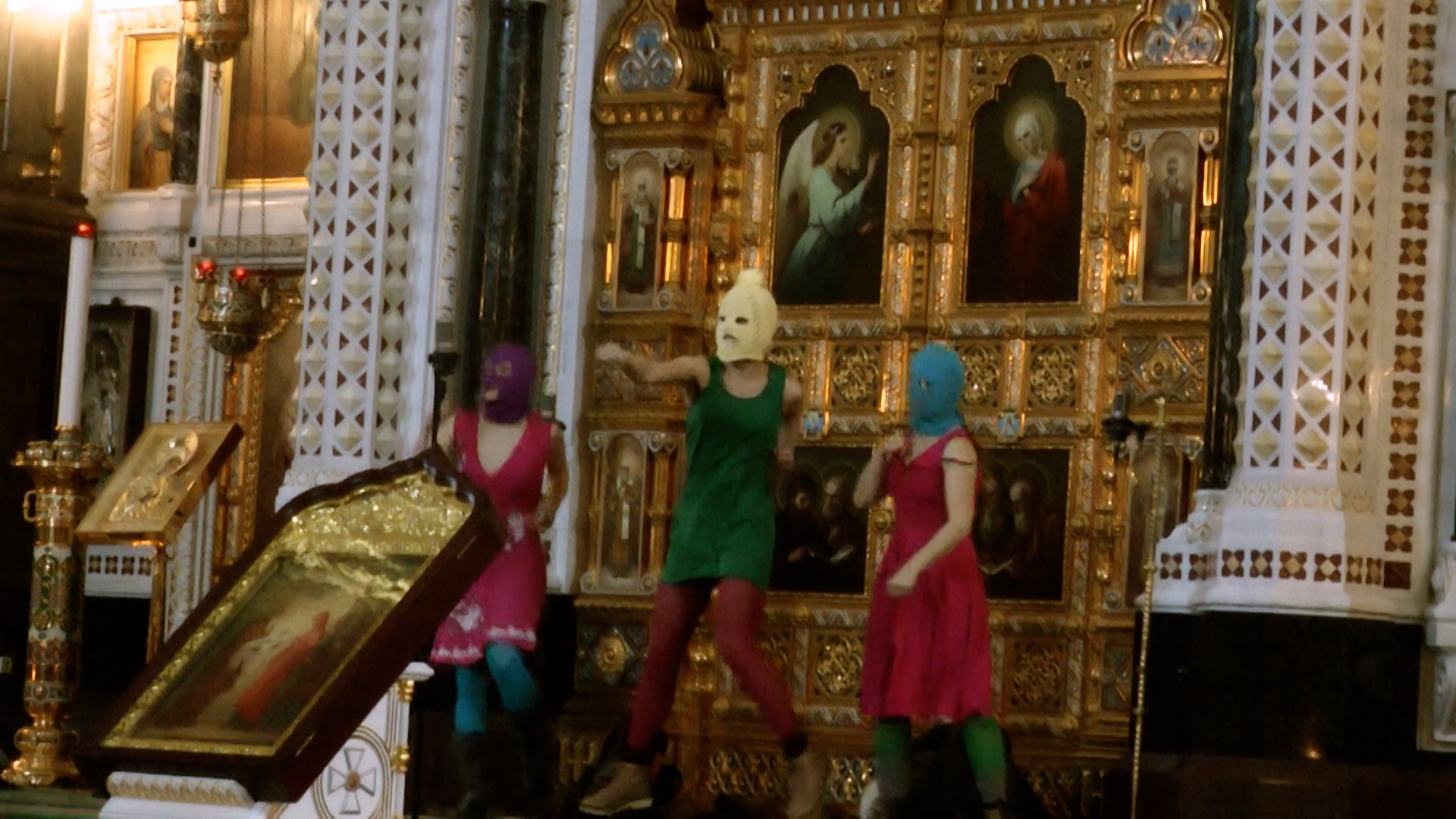
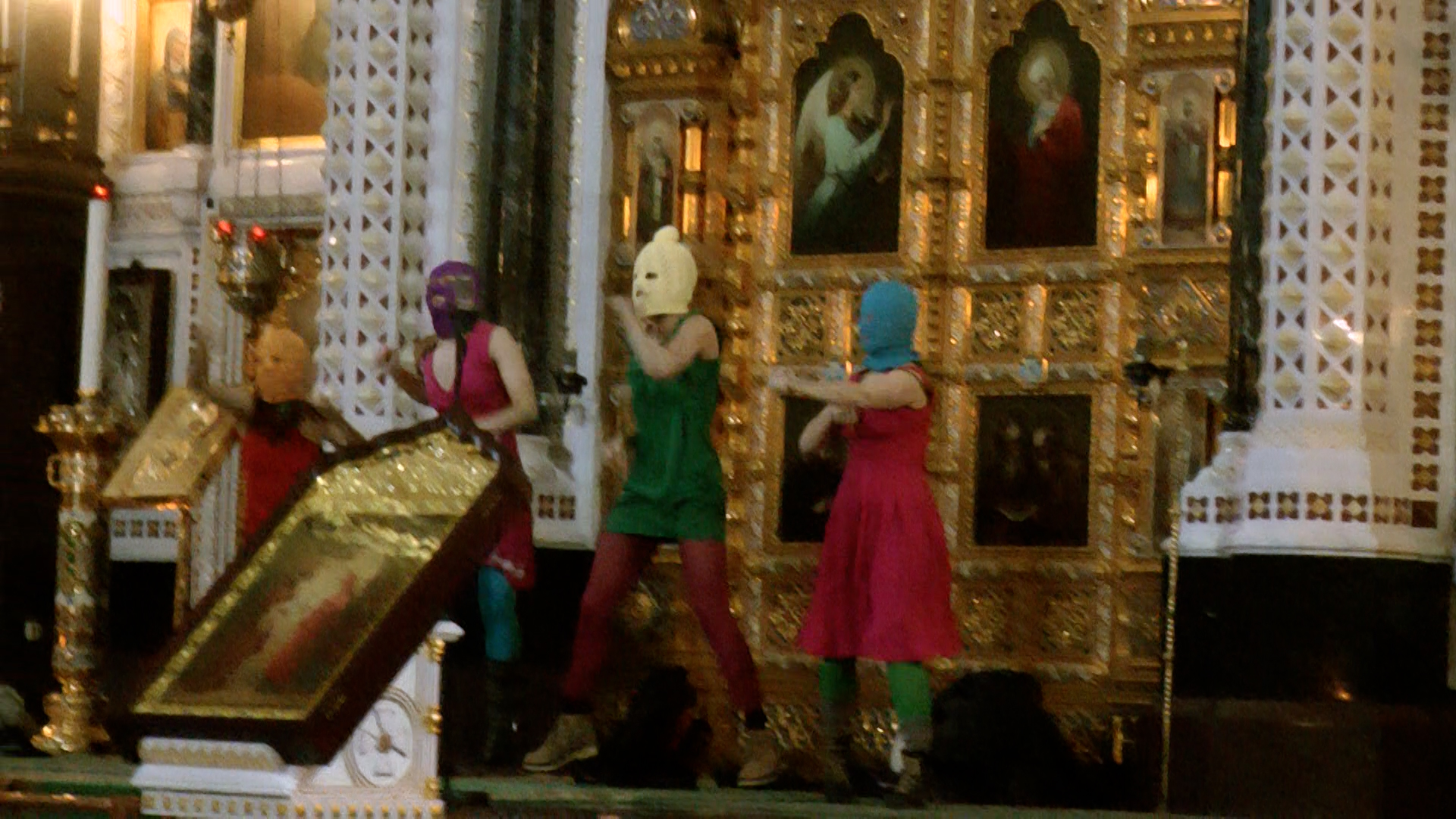
Punk Prayer: Mother of God, Drive Putin Away
In February 2012, after a wave of mass protests had failed to bring about political change, members of Pussy Riot decided to go and pray to the Mother of God, asking her to drive Putin away. It was Maslenitsa week – a time traditionally associated with dressing up, noise, public misrule, parody, and the reversal of roles.
Their prayer displeased both the religious and secular authorities, eventually leading to criminal charges and two-year prison sentences for several members of the group.
The performances and filming took place in two Moscow churches – Yelokhovo Cathedral and the Cathedral of Christ the Saviour – and the footage was later edited into the final music video.
Putin Pissed Himself
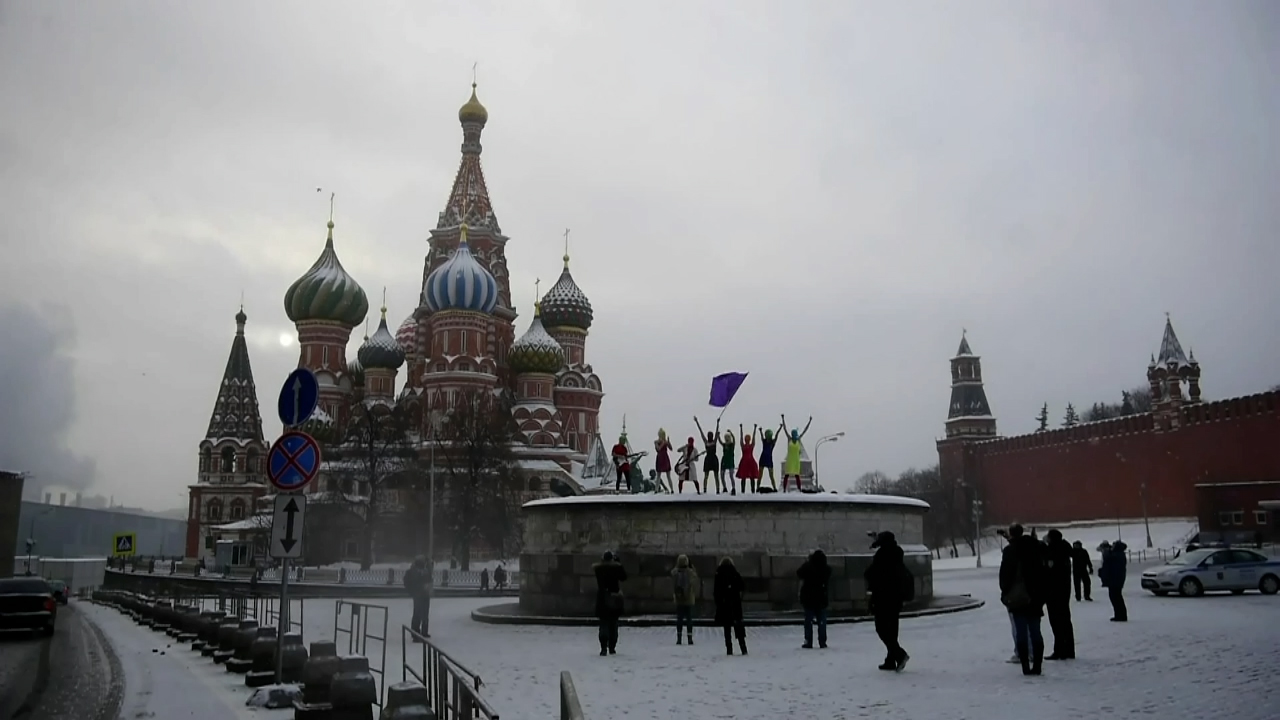
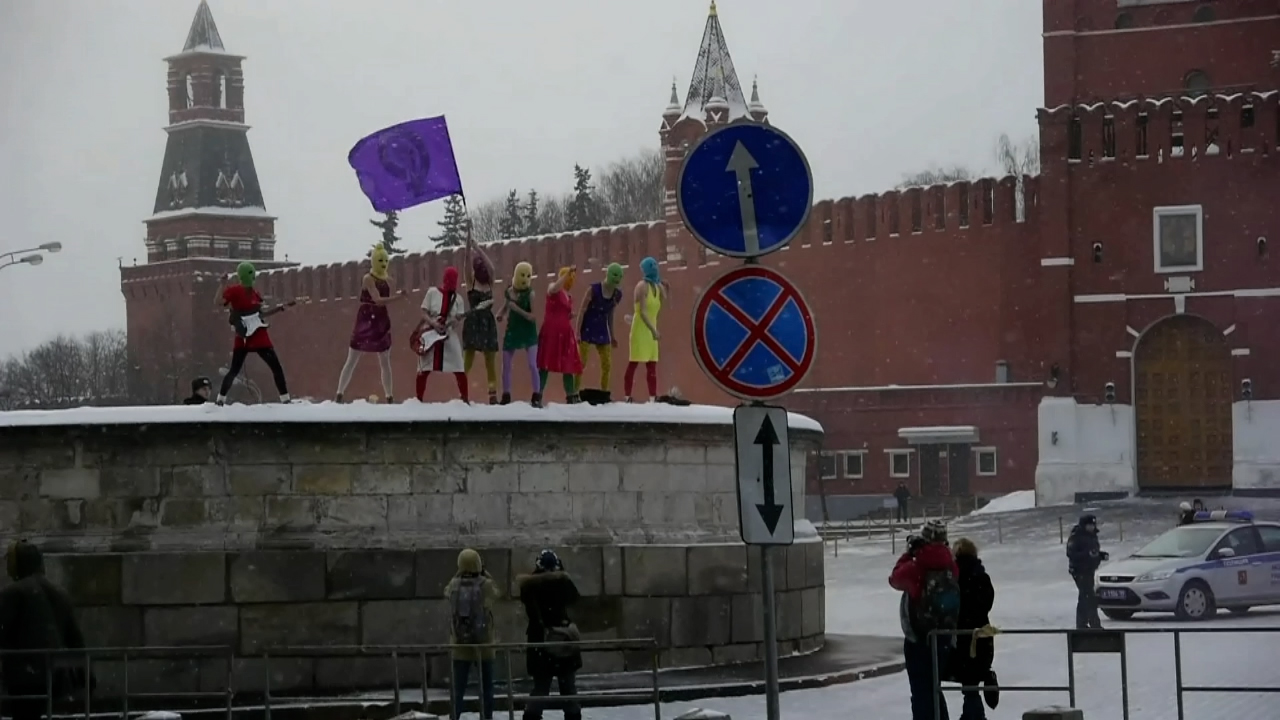
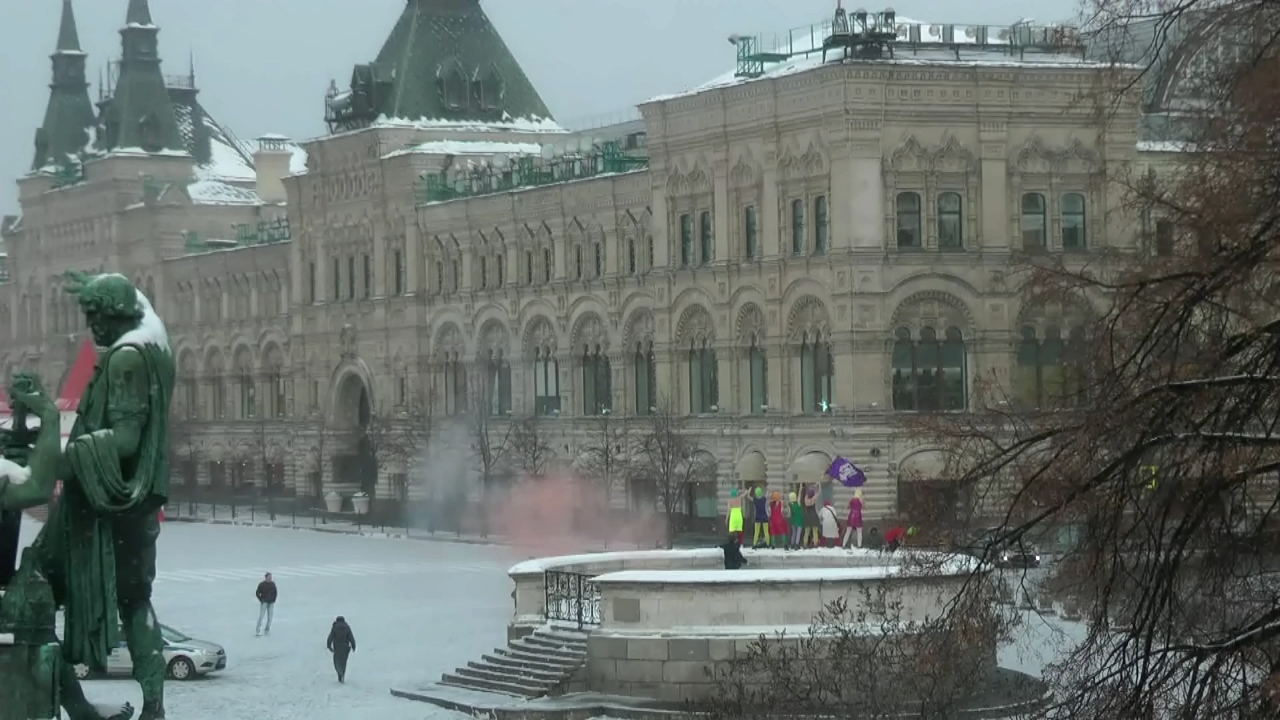
The action took place on January 20, 2012, at Lobnoye Mesto on Red Square. It was a bitterly cold Moscow day, with temperatures around –15°C.
To film the action, Taisiya and Vasily arrived at the location two hours before the scheduled start to study the site and choose the most expressive camera positions and angles. Vasily chose a reverse, elevated viewpoint from a window of St. Basil’s Cathedral, while Taisiya filmed from below, framing the action against the Kremlin towers.
During the action, while Vasily was filming from inside the cathedral, a church choir began singing an Orthodox chant. He recalls the combination of the women in bright, light dresses in the middle of the snow-covered square, the colored smoke from the smoke bombs, the feminist banner waving in the wind, and the sound of the choir as one of the most unforgettable experiences of his life.
Death to Prison, Freedom to Protest
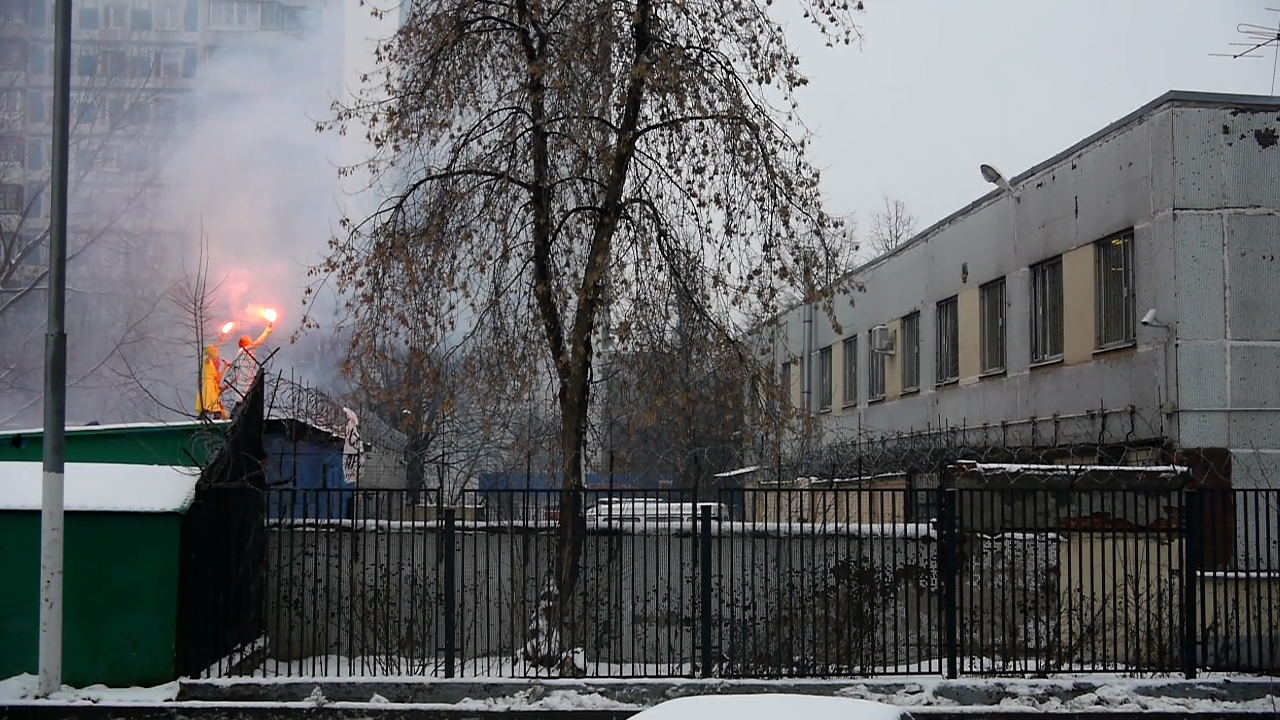
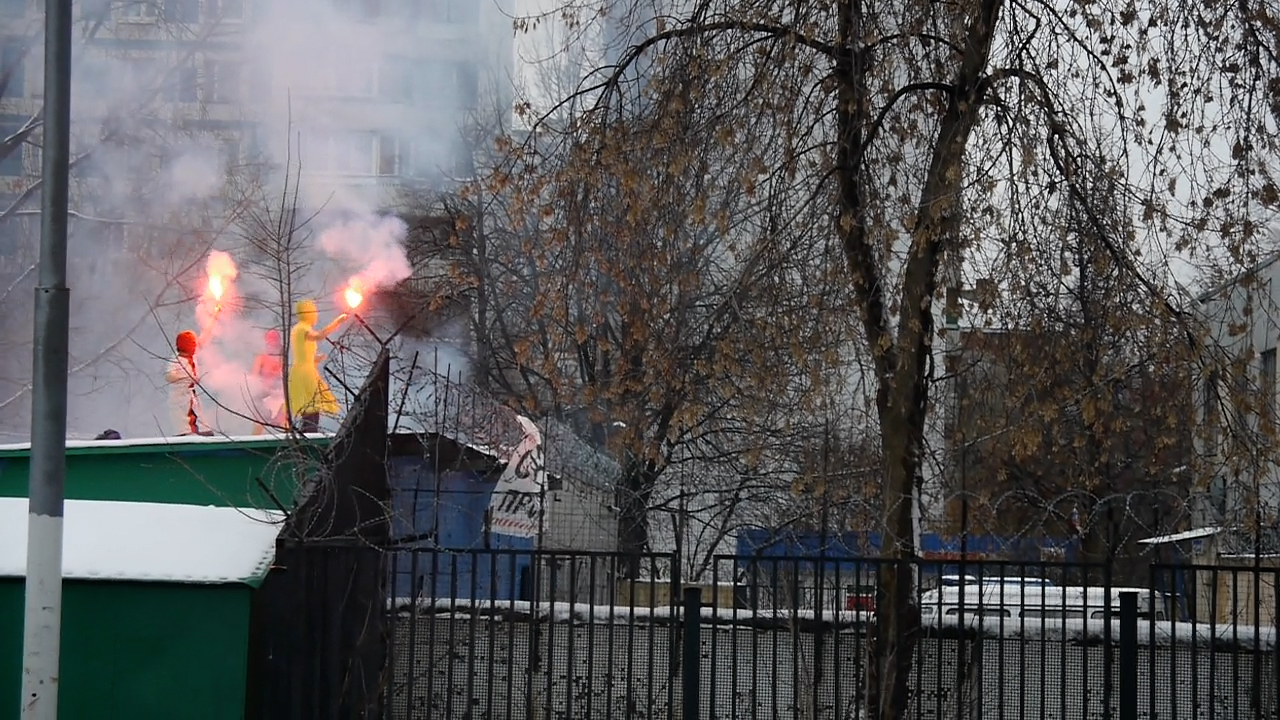
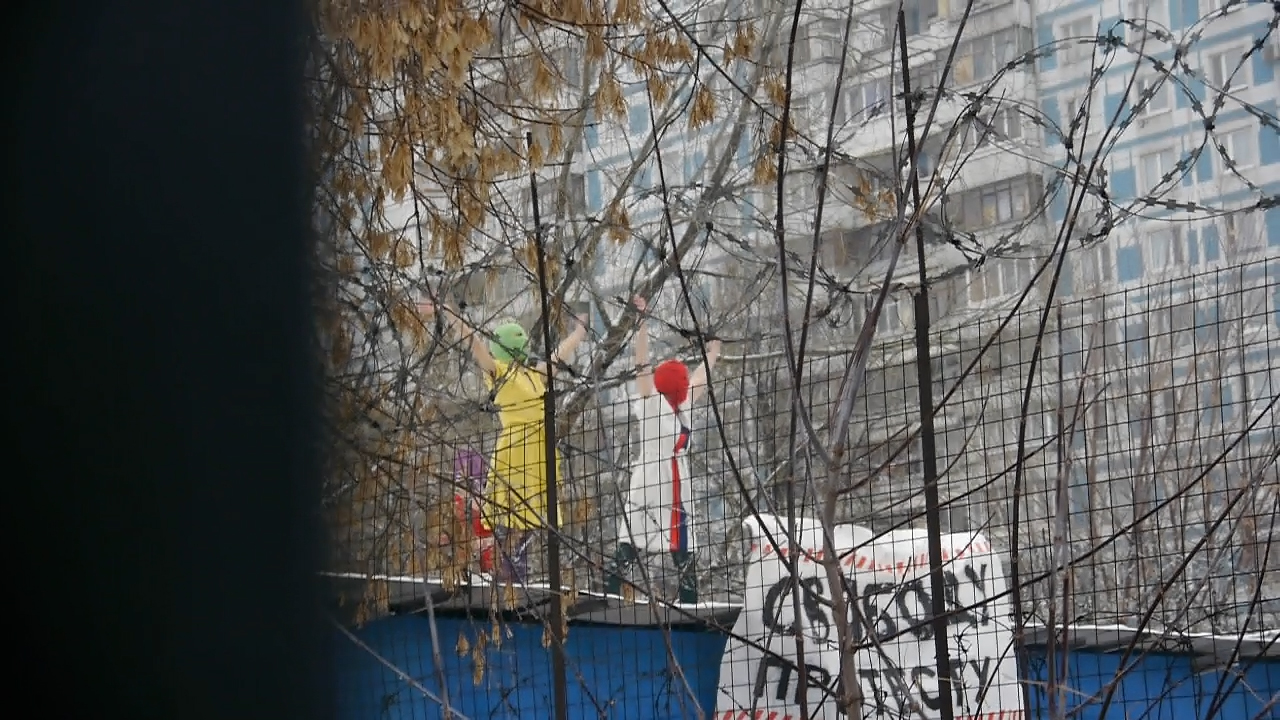
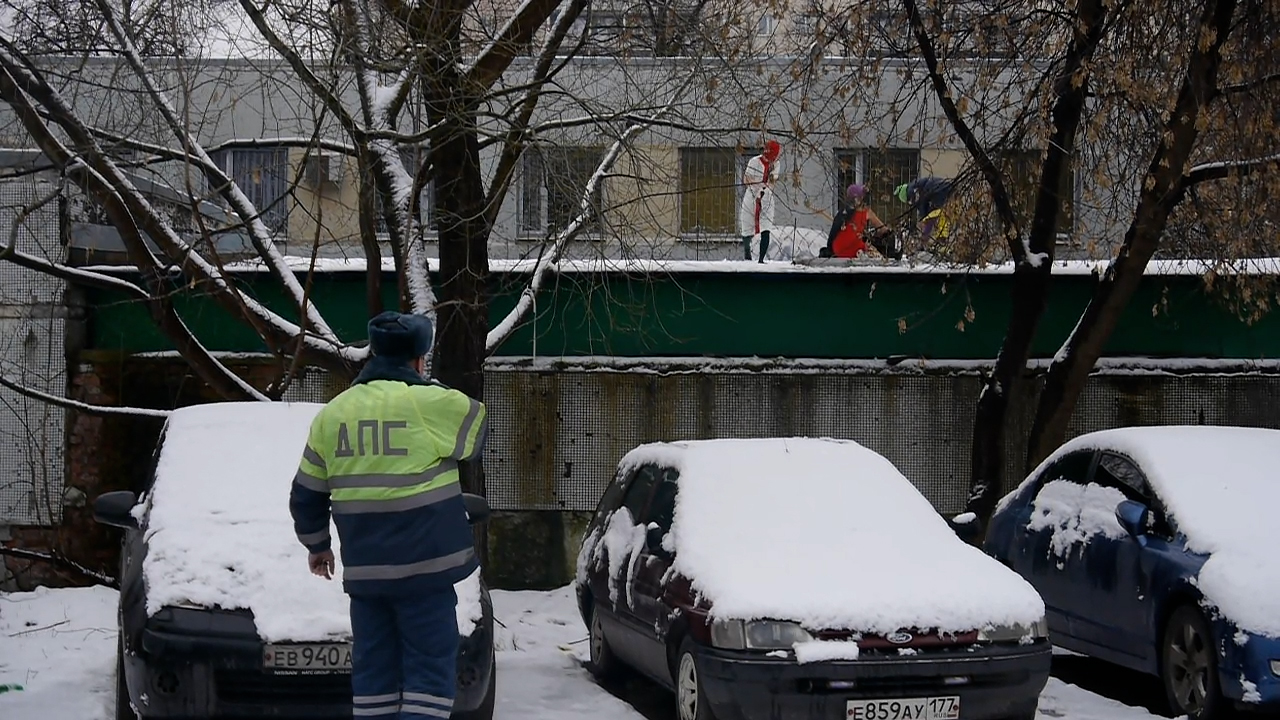
The action took place in December 2011, following the mass detention and arrest of participants in the large-scale protests sparked by fraud in the Russian State Duma elections. Members of Pussy Riot performed on a rooftop opposite Special Detention Center No. 1, where many of those arrested were being held at the time, including opposition leaders such as Alexei Navalny.
The group performed the song «Death to Prison, Freedom to Protest», calling for the peaceful occupation of public squares and the release of political prisoners.
Kropotkin Vodka
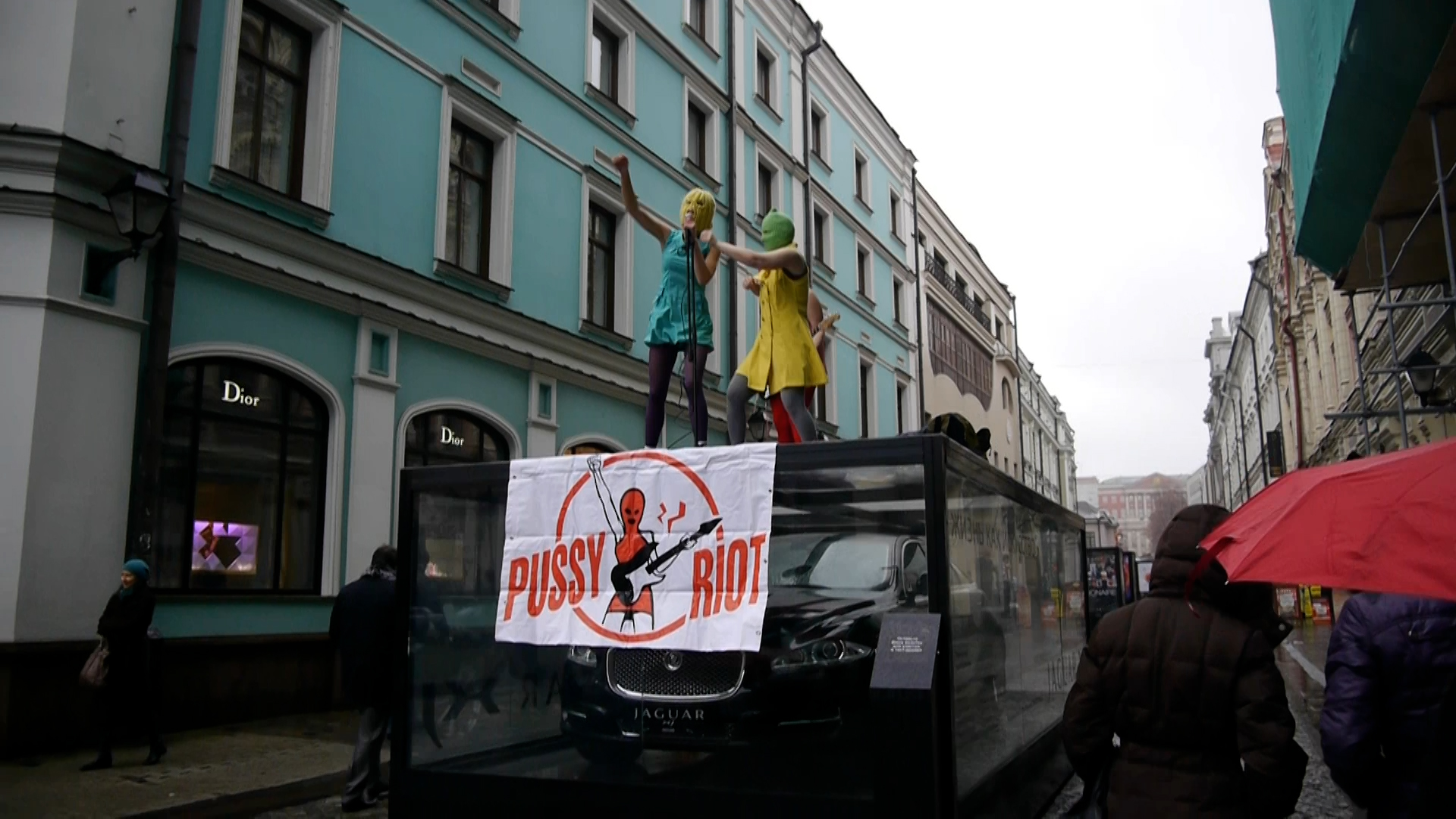
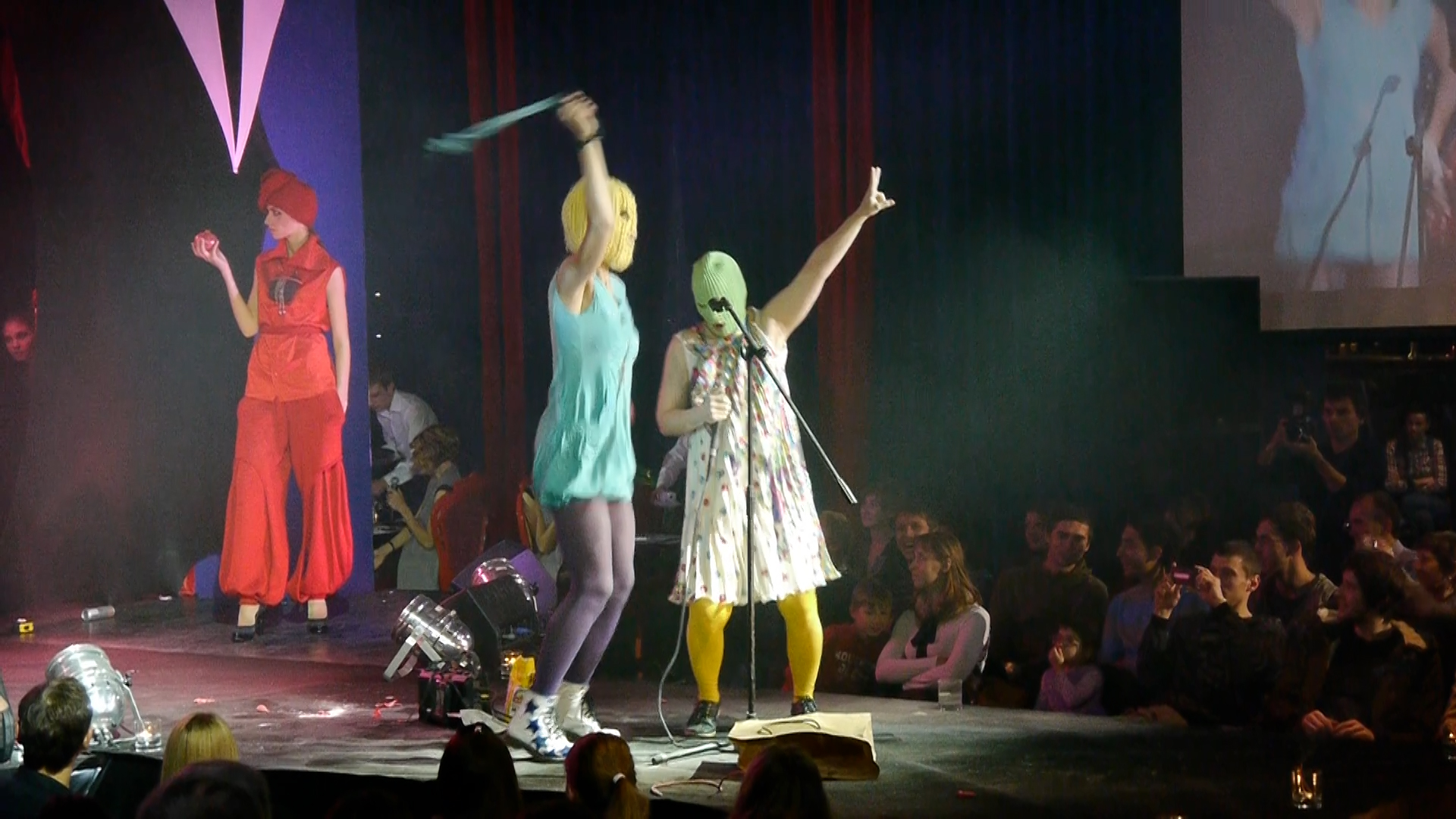
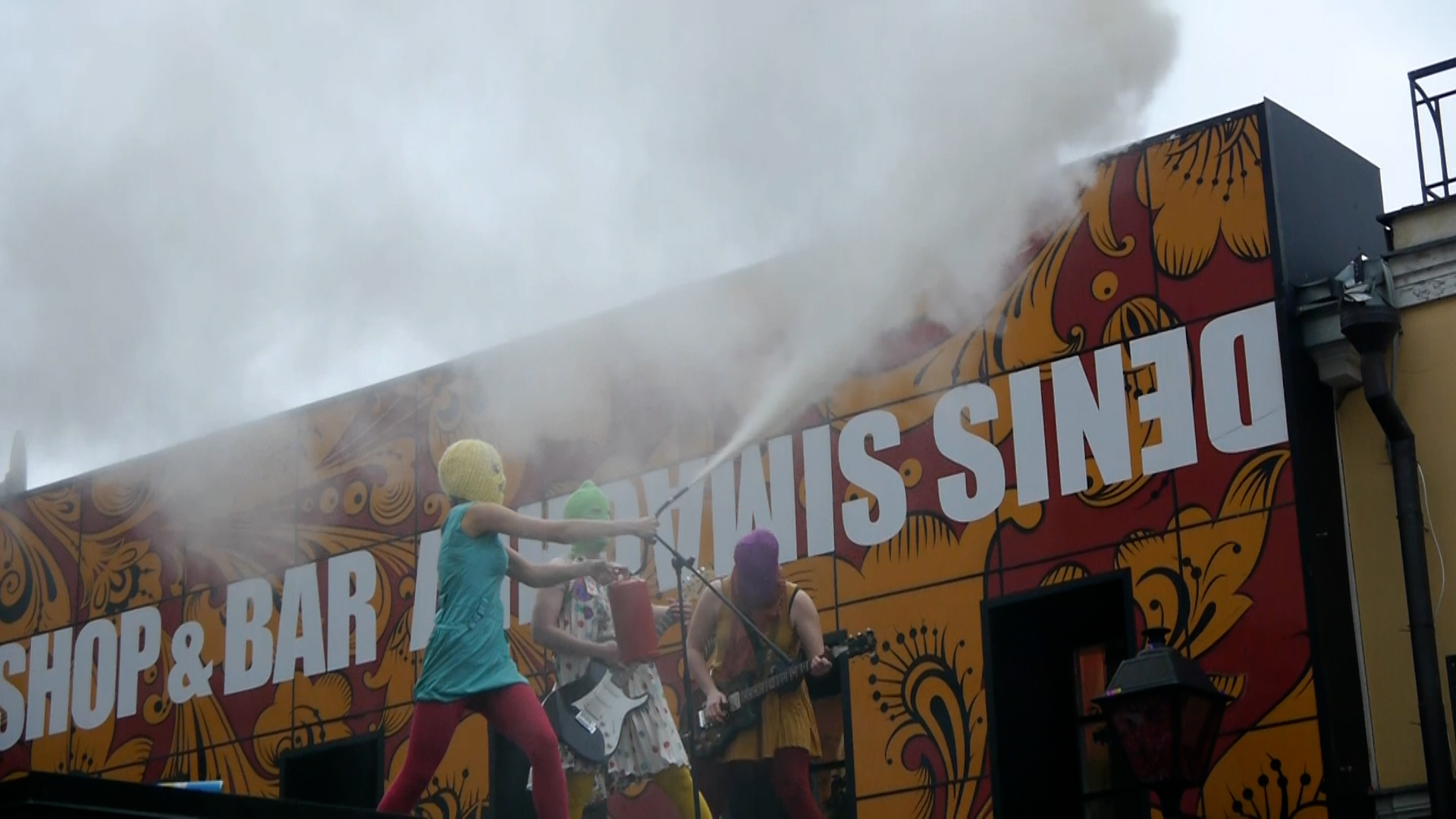
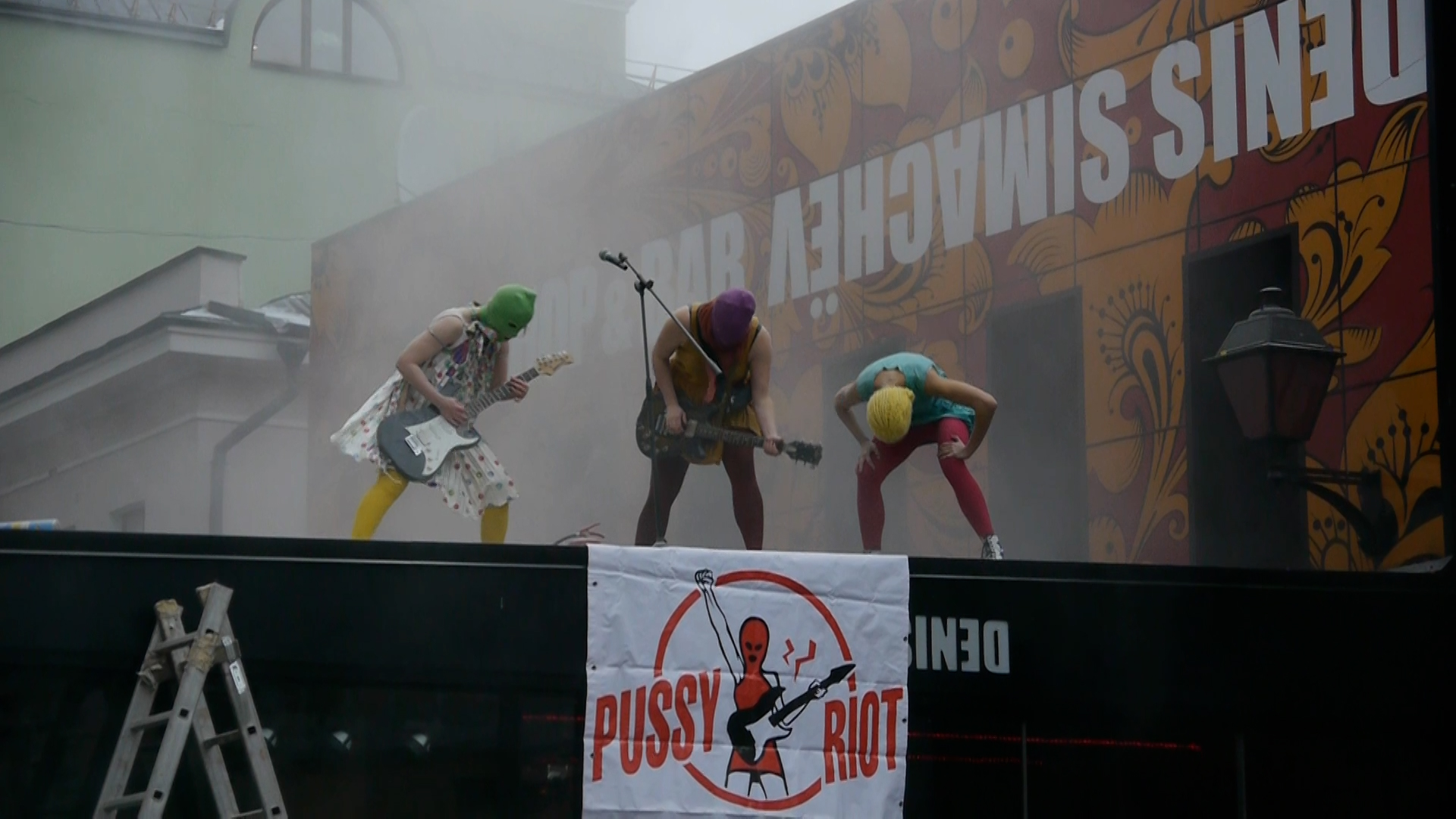
This was Pussy Riot’s second series of actions, carried out in November 2011. The tour addressed the phenomenon of Putin-era glamour, characteristic of the prosperous and apolitical 2000s in Russia.
Members of the group invaded luxury boutiques, performed at fashion shows in front of prominent glamorous supporters of Putin, and staged actions on the roofs of upscale restaurants and cars, calling for a coup d’état in Russia.
Free the Cobblestones
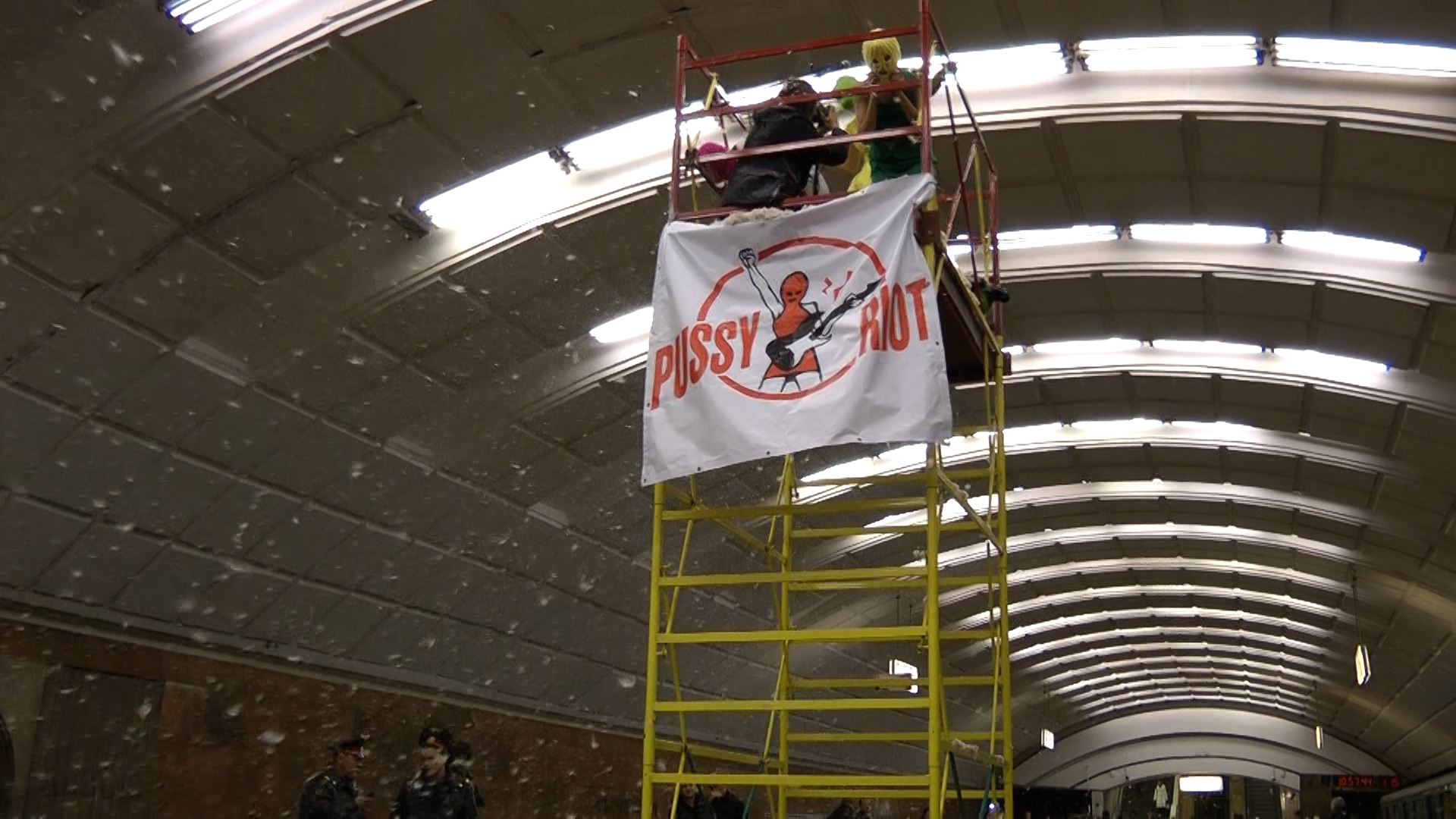
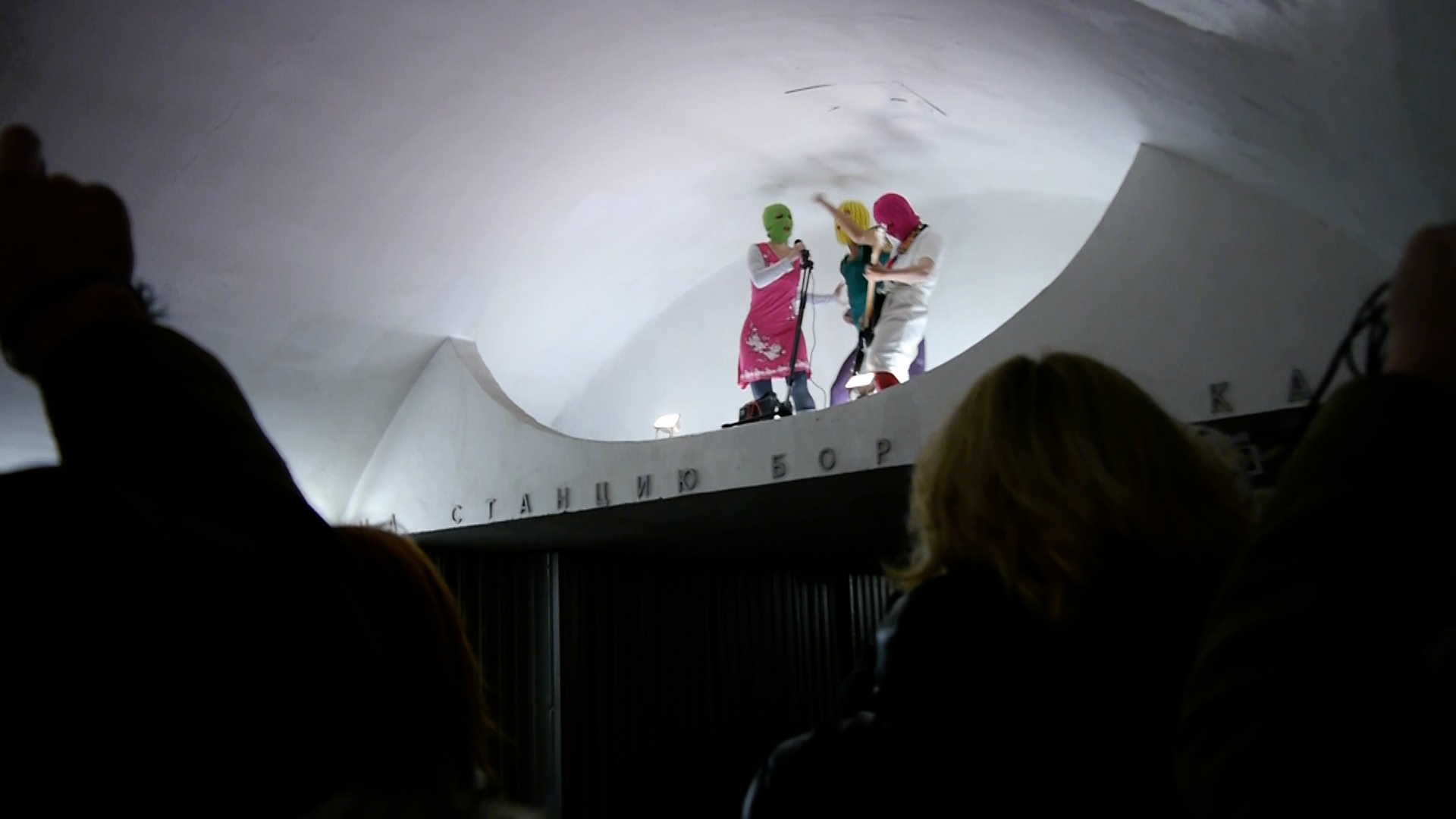
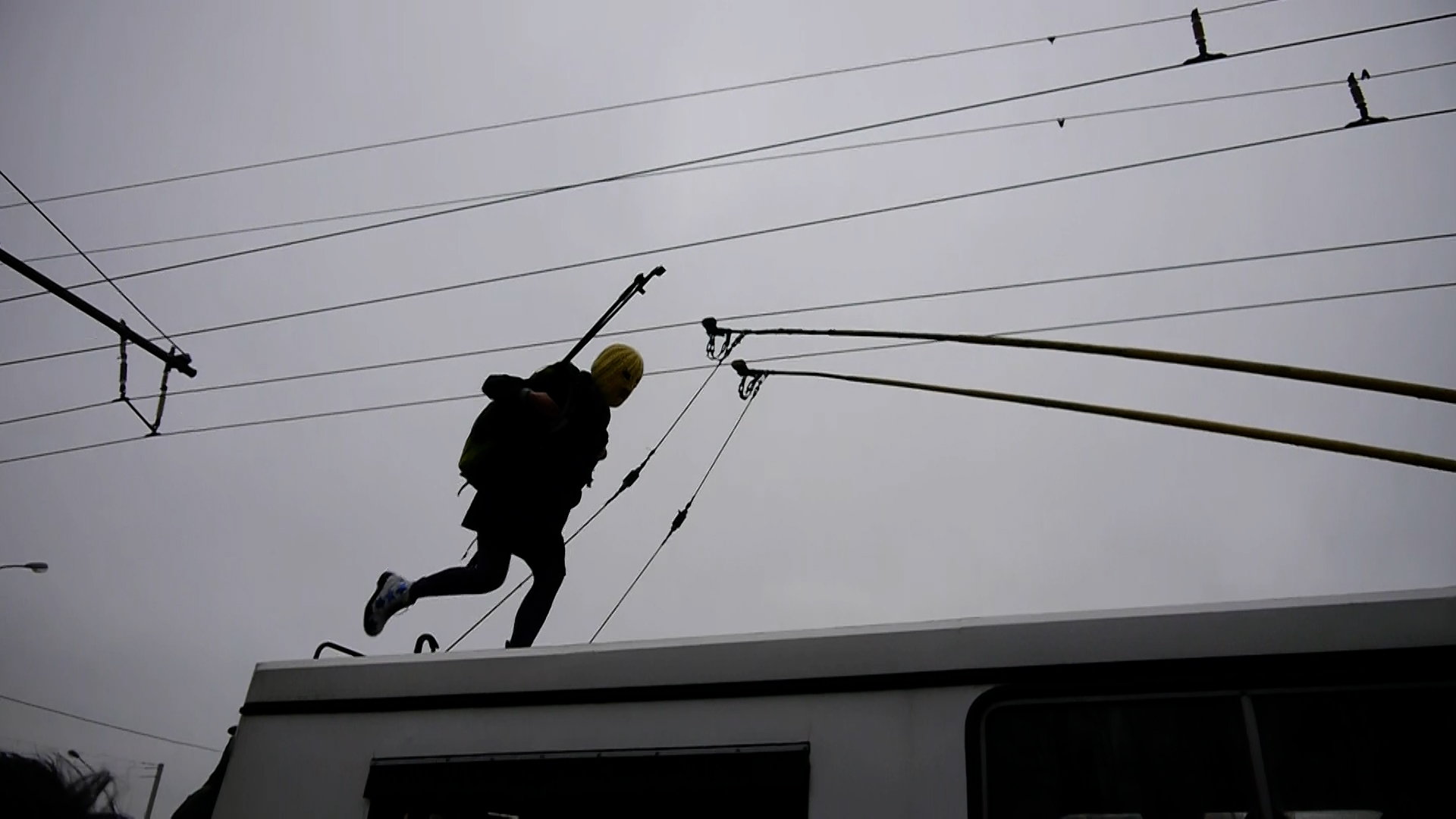
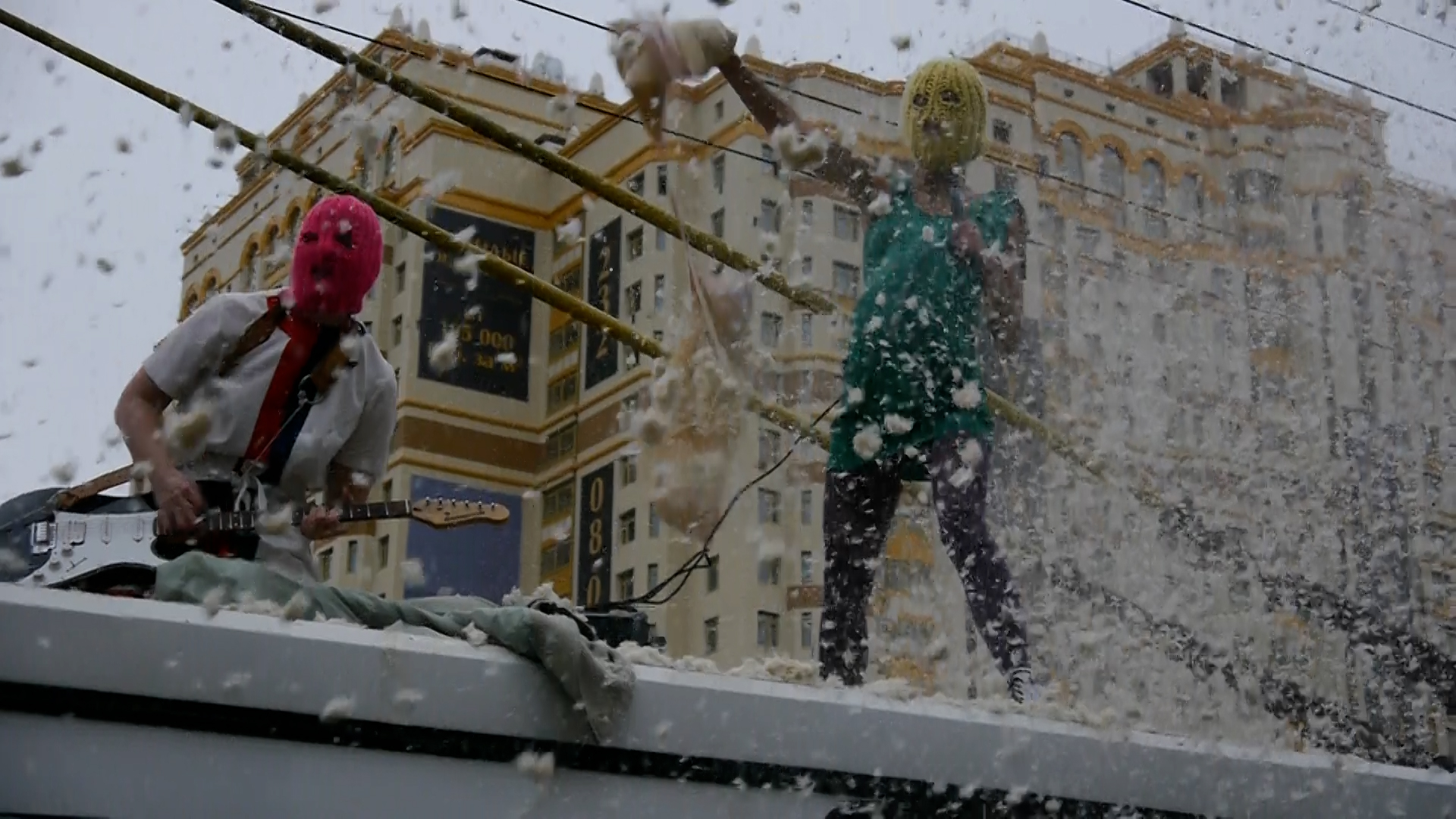
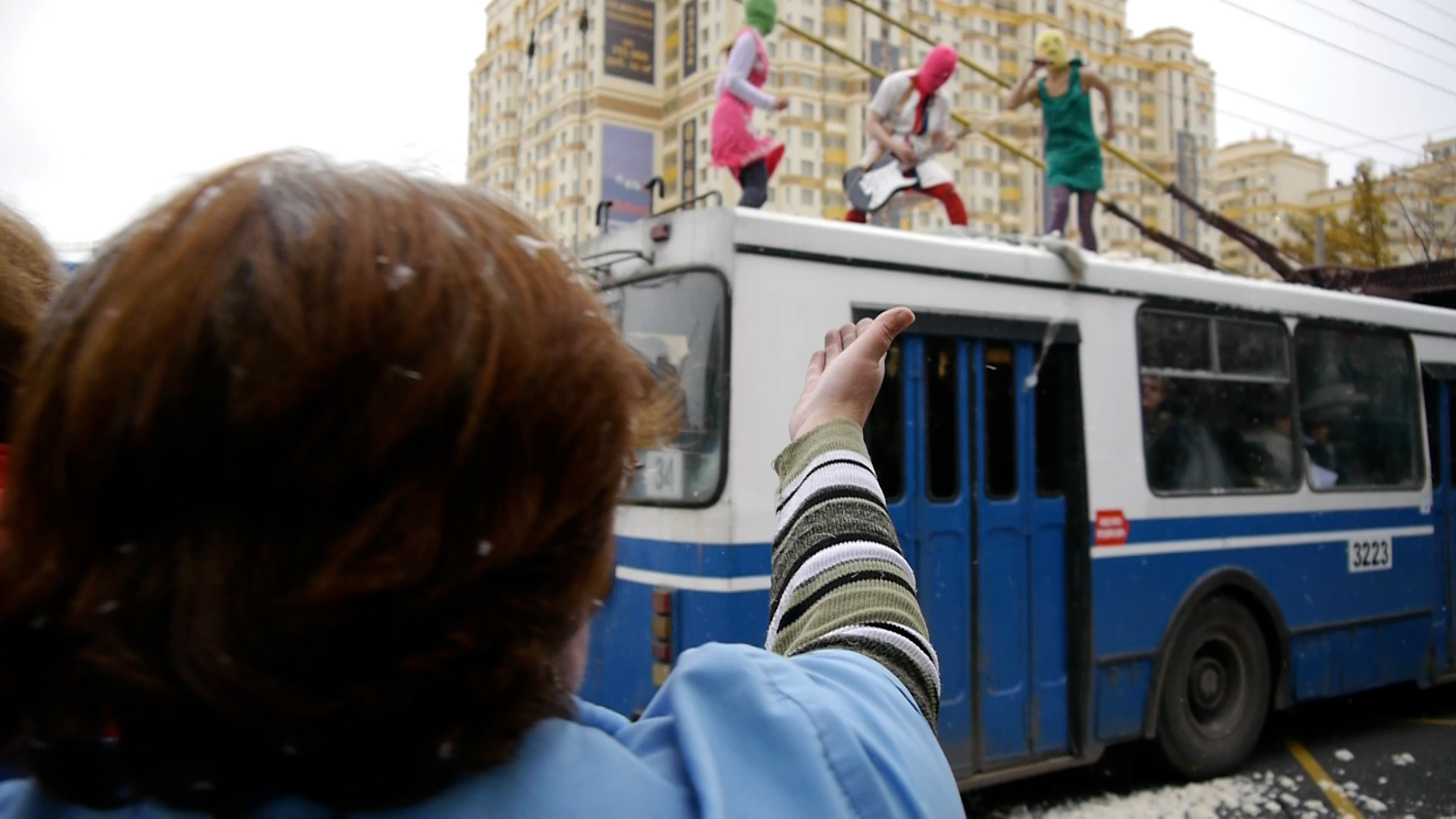
This was Pussy Riot’s first tour, which took place in October and November 2011 at various sites across Moscow’s public transport system. Members of the group performed atop scaffolding at metro stations and on the roof of a trolleybus during rush hour.
The song «Free the Cobblestones» called on people to protest against the upcoming State Duma elections in December 2011.